
Easy Egg Custard Pie Recipe
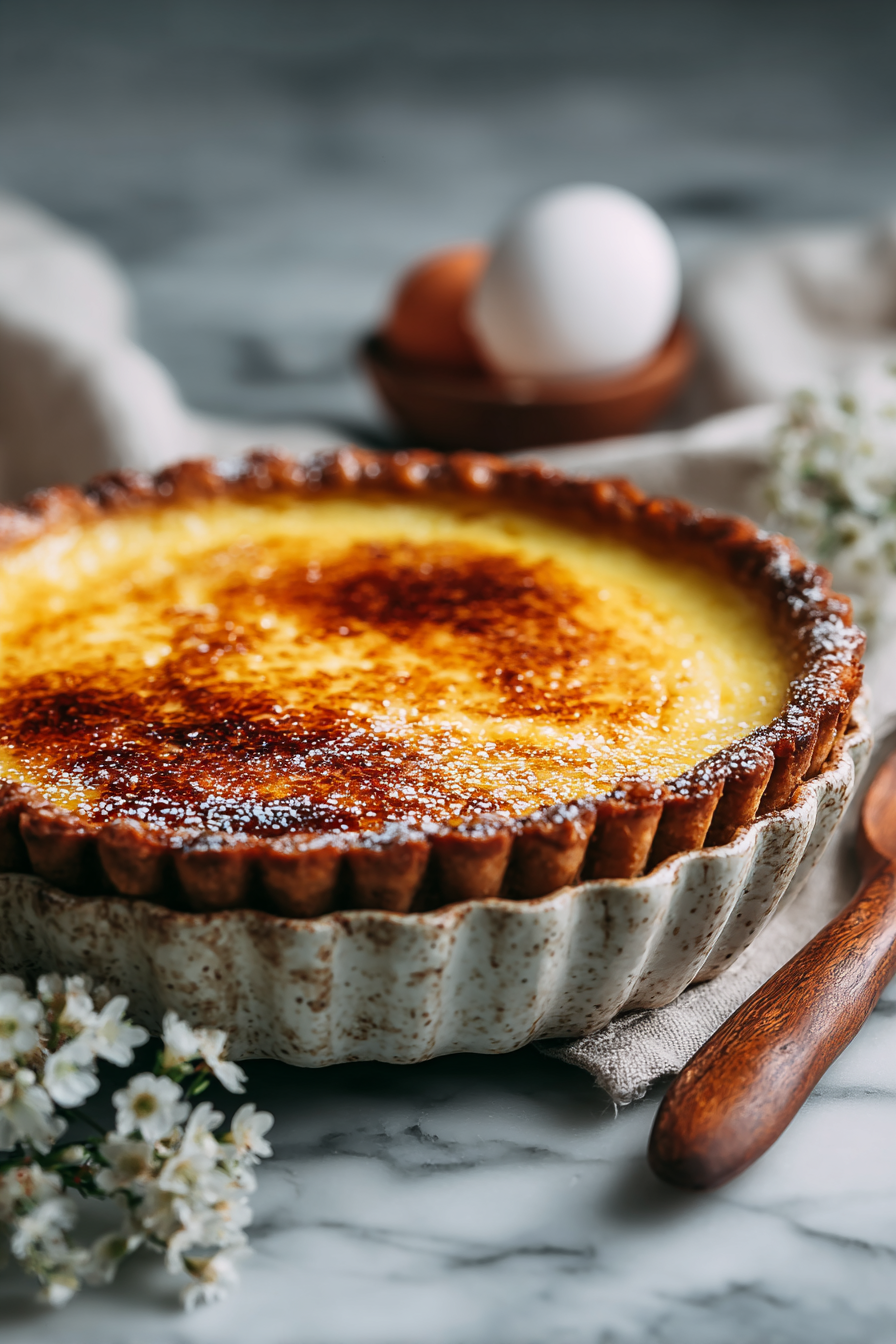
This old-school egg custard pie is the kind of dessert that feels like coming home: simple ingredients, silky texture, and that warm-baked custard aroma that fills the kitchen. It’s an unfussy, comforting pie made from eggs, milk or cream, sugar, and vanilla, set in a flaky crust — the kind of thing you make when you want something nostalgic that’s genuinely easy to pull off.
My husband calls this “the pie that fixes everything.” Whenever one of us has had a rough day, he asks if I’ll make the custard pie and brings a mug of tea while it cools. Our toddler loves tapping the fork at the perfectly set edge and stealing a cold spoonful out of the fridge the next morning. It’s become our weekend ritual: I blind-bake a crust, we chat about plans for the week, and then we share a quiet slice together. Simple, reliable, and oddly celebratory.
Why You’ll Love This Easy Egg Custard Pie Recipe
– It’s made from pantry staples you probably already have, so it’s low-fuss and high-comfort.
– The texture is luxuriously smooth — a delicate balance of creamy and set that feels special without being fussy.
– It’s endlessly adaptable: add a zest of citrus, a sprinkle of nutmeg, or keep it pure and classic.
– Great for make-ahead entertaining — it improves a little in the fridge as the flavors settle.
Behind the Recipe
This pie has taught me patience more than anything. The custard wants to be treated gently: moderate oven heat, no frantic whipping, and time to rest so the filling finishes setting without cracking. I’ve learned to always strain the custard before pouring it into the crust — that tiny step removes any stray chalaza or cooked egg bits and guarantees a perfectly smooth surface. Blind-baking the crust just enough to protect it from a soggy bottom is another small move that pays off. People often overbake because they’re afraid the center will be too soft, but that’s what gives the pie its silkiness; the center should still have a slight wobble when you take it out.
Shopping Tips
– Eggs: Choose the freshest eggs you can find — they give the filling structure and a bright color; large eggs are what most recipes expect.
– Dairy: For a richer custard, use whole milk plus a bit of cream; if you prefer lighter, whole milk alone still works well.
– Baking Basics (Flour/Sugar/Leaveners): Use granulated sugar for a clean sweetness; if you’re making the crust from scratch, all-purpose flour is the go-to.
– Fats & Oils: Butter in the crust adds flavor and flakiness; if you’re short on time, a good store-bought pastry works fine.
– Sweeteners: Regular granulated sugar keeps the classic profile, but you can reduce it slightly or swap in honey for a warmer flavor — adjust to taste.
Prep Ahead Ideas
– Blind-bake the pie crust a day ahead and store it covered at room temperature; this saves active time on the day you plan to serve.
– Measure out sugar and vanilla and separate the eggs the night before; store eggs cold and covered.
– Make the custard entirely a day ahead — it keeps well in the fridge and the flavors harmonize overnight, which makes hosting easier.
Time-Saving Tricks
– Use a store-bought pie crust if you want to skip rolling and shaping; a good quality crust still gives a great result.
– Warm the milk gently on the stovetop rather than cold; tempering warm milk into beaten eggs reduces whisking time and helps avoid curdling.
– Do your mise en place: have everything measured and nearby so the filling comes together quickly and calmly.
– Let the pie cool on a rack to room temp before chilling; rushing this step can cause condensation and a soggy top.
Common Mistakes
– Overbaking: I once left a custard in too long and ended up with a rubbery texture — aim for a gentle jiggle in the center and the pie will set as it cools.
– Skipping the strain: tiny cooked egg bits can mar an otherwise silky custard; strain for a flawless finish.
– Soggy bottom: not blind-baking the crust or using an overly wet filling can cause seepage — a brief blind-bake helps avoid this.
– Too much heat while cooking: high oven temps can cause the custard to puff and crack; a steady, moderate oven is kinder to custard.
What to Serve It With
A simple dusting of freshly grated nutmeg or cinnamon enhances the flavor without hiding the custard’s delicate profile. Serve slices with lightly sweetened whipped cream, a spoonful of berry compote for brightness, or a scoop of vanilla ice cream for contrast. For a cozy finish, a small pot of espresso or a mug of black tea pairs beautifully.
Tips & Mistakes
If the top browns too quickly, tent loosely with foil halfway through baking to protect the custard. If the filling weeps a little after slicing, that’s usually fine — just blot gently and serve; it won’t affect flavor. If the crust tastes undercooked, prebake a bit longer next time and dock (poke) the bottom to keep it flat.
Storage Tips
Store in airtight containers in the fridge. It reheats beautifully, but if you sneak a bite cold straight from the container, it still works.
Variations and Substitutions
– For a citrus twist, fold in a little lemon or orange zest to the custard; it brightens the whole pie.
– Swap half-and-half or cream for whole milk to make a richer custard, or use all milk for a leaner version.
– For a gluten-free option, use a gluten-free pie crust — the custard filling itself is naturally gluten-free.
– Avoid high-moisture fruit toppings directly on the custard unless you’ve drained them well; extra liquid can make the filling weep.

Write me the frequently asked questions and answers Easy Egg Custard Pie Recipe in the same way as the example below.