
Mediterranean Creamy Chicken Orzo Bake
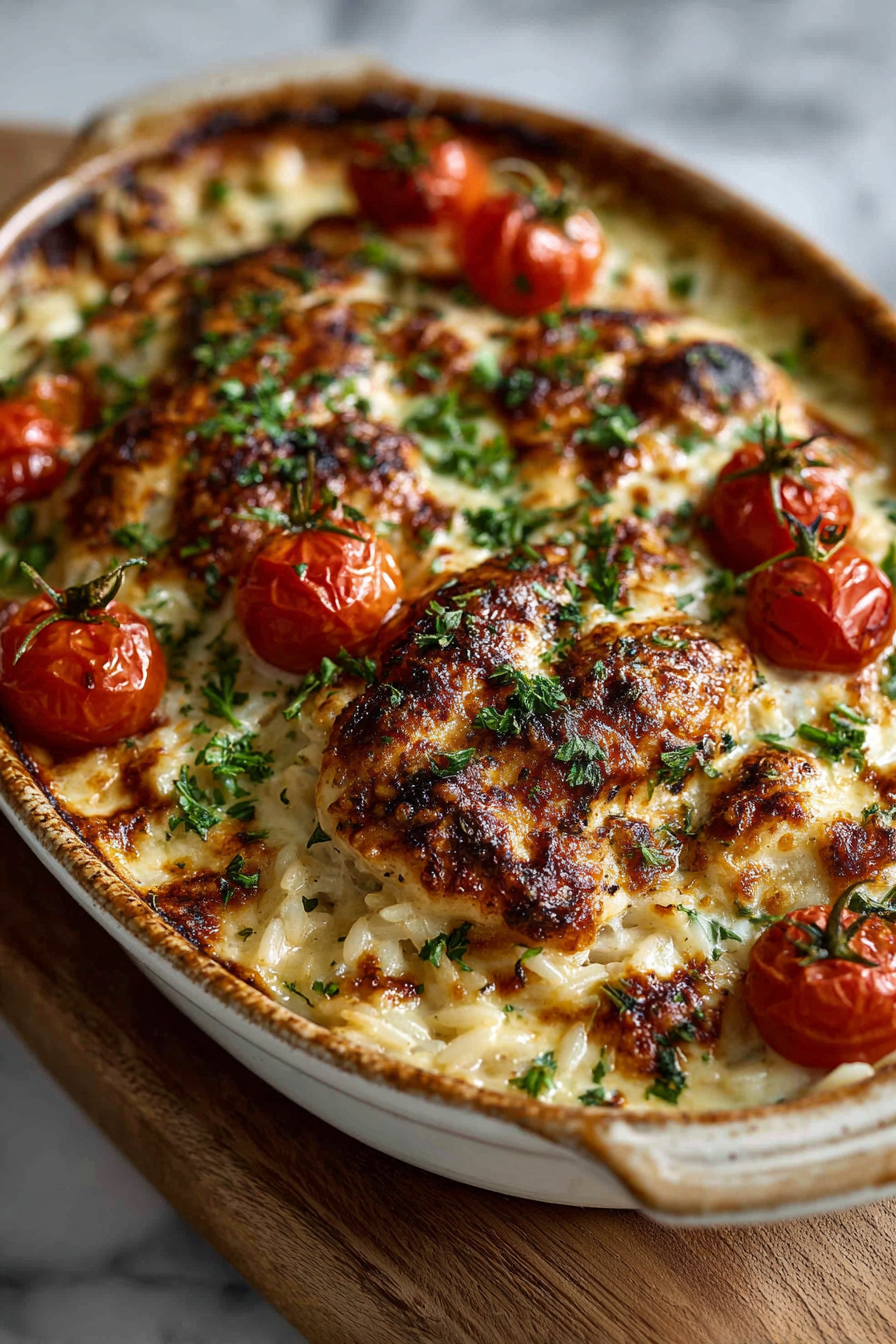
This creamy, sun‑bright casserole is a cozy Mediterranean take on chicken and orzo — rich with tangy tomatoes, creamy cheese, olives, and herbs baked until bubbly and golden on top. It’s the kind of weeknight dinner that feels special without being fussy: one pan to brown the chicken, a quick simmer to coax the orzo tender, then into the oven to finish with a cheesy crust. If you like comforting pasta bakes with fresh, savory flavors (and minimal fuss), this will become one of your go‑to dinners.
My husband calls this “the dish that fixes everything,” which is high praise in our house. On busy school nights it’s reliably comforting; on lazy Sundays I cook a double batch so he can pretend he’s packed a gourmet work lunch. It started as an attempt to use up a jar of olives and leftover feta, and now it’s become a staple — he asks for it when he wants something warm and a little bright at the same time. I still smile when the whole family digs inside and the top crackles as we scoop out steaming spoonfuls.
Why You’ll Love This Mediterranean Creamy Chicken Orzo Bake
– All the cozy, saucy comfort of a casserole with the lightness of Mediterranean ingredients — tangy tomatoes, briny olives, lemon, and a melty cheese finish.
– Hands-on time is short: a quick sauté, a simmer to cook the orzo, then a hands-off bake while you set the table or make a salad.
– It’s endlessly adaptable: swap proteins, use different cheeses, or add seasonal vegetables and it still sings.
– Great leftovers — the flavors deepen overnight, so your lunch the next day is just as good (sometimes better).
Behind the Recipe
This started as a weeknight experiment to combine orzo’s quick-cooking ease with a casserole’s homey appeal. I learned that searing the chicken first adds flavor and texture you miss when the meat is just mixed in raw; similarly, browning aromatics (onion, garlic) properly prevents a one-note, flat sauce. The trick to a creamy finish is controlling the liquid: too much and the bake becomes soupy, too little and the orzo dries out. I usually under‑cook the orzo by a minute when simmering so the final oven time yields perfectly tender, slightly al dente grains. Little finishes — a squeeze of lemon before serving and a scattering of fresh herbs — brighten everything and make leftovers feel deliberate, not afterthought.
Shopping Tips
– Protein: Choose boneless, skinless chicken thighs for juiciness, or breasts if you prefer leaner meat; thighs tolerate the oven bake better and are forgiving if slightly overcooked.
– Grains/Pasta: Buy good-quality orzo — not the instant kind — so the texture holds up during baking; pearled orzo keeps a nice bite.
– Dairy: Use a full‑fat cream or half-and-half for a genuinely creamy sauce; skim options can separate when baked.
– Cheese: Feta gives the bake its Mediterranean tang, while a small amount of mozzarella or fontina on top creates that golden, melty crust.
– Fresh Herbs: Pick up parsley and oregano or basil; fresh herbs added after baking make a big visual and flavor difference.
– Vegetables: Look for firm tomatoes (or good-quality canned diced tomatoes if not in season) and firm bell peppers; avoid overripe tomatoes that turn to mush during cooking.
Prep Ahead Ideas
– Trim and cube the chicken the day before and store it in an airtight container with a little olive oil, lemon zest, and a pinch of salt to marinate briefly.
– Chop onions, mince garlic, and measure spices into small containers or a zip-top bag so everything goes into the pan without delay.
– Pre-measure the orzo and stock; keep them together in the pantry so you can simmer right away. Store chopped veg in the fridge for up to 48 hours in airtight containers.
– If you like, assemble the unbaked casserole in an oven-safe dish, cover tightly, and refrigerate for up to 24 hours; add a few extra minutes to the bake time if cold from the fridge.
Time-Saving Tricks
– Use boneless chicken thighs to skip extra trimming and to reduce cook time compared with bone-in pieces.
– Substitute pre-shredded cheese and jarred roasted red peppers in a pinch — both save prep time with minimal flavor loss.
– Cook the orzo directly in the sauce (one-pot method) to avoid draining and to concentrate flavor; just watch the liquid so it doesn’t get too thick.
– Do a quick mise en place: have herbs chopped, cheeses grated, and cans opened before you start sautéing; it cuts transition times and reduces the stress of juggling pans.
– When time is tight, use frozen spinach or peas stirred in during the last five minutes of baking so you still get a veggie boost without chopping.
Common Mistakes
– Over-salting early: cheeses and olives add salt, so taste before adding more; you can always finish with flaky salt at the table.
– Letting the orzo overcook into mush: undercook it slightly before baking so it finishes firm but tender.
– Too much liquid going into the oven makes a soupy casserole; if it seems thin before baking, skim a ladleful or increase the cheese for binding.
– Skipping the brown on the chicken: I once tossed raw chicken straight in and missed the caramelized flavor that searing offers — sear first, then combine.
– Not resting after baking: letting the dish sit 5–10 minutes after it comes out helps the sauce set so servings hold together better.
What to Serve It With
Tips & Mistakes
Serve this with a crisp green salad dressed in lemon vinaigrette, crusty bread for sopping up the sauce, or roasted seasonal vegetables for a heartier plate. Avoid heavy, cream-based sides that compete with the casserole’s richness; a bright, acidic side keeps the meal balanced.
Storage Tips
Store in airtight containers in the fridge. It reheats beautifully, but if you sneak a bite cold straight from the container, it still works. Refrigerate for up to 3–4 days; reheat gently in the oven or microwave with a splash of broth or water to loosen the sauce, and refresh with a squeeze of lemon and fresh herbs.
Variations and Substitutions
– Swap chicken for diced turkey, cooked sausage, or a can of drained white beans for a vegetarian-friendly protein swap (use vegetable stock).
– Try goat cheese in place of feta for a tangier, creamier finish, or add a little grated Parmesan to deepen umami.
– If olives aren’t your thing, capers or chopped artichoke hearts give similar briny notes without the olive texture.
– Use brown rice or short-grain barley for a gluten-free-ish twist (adjust liquid and cooking time accordingly), but know the classic orzo texture is worth keeping when possible.