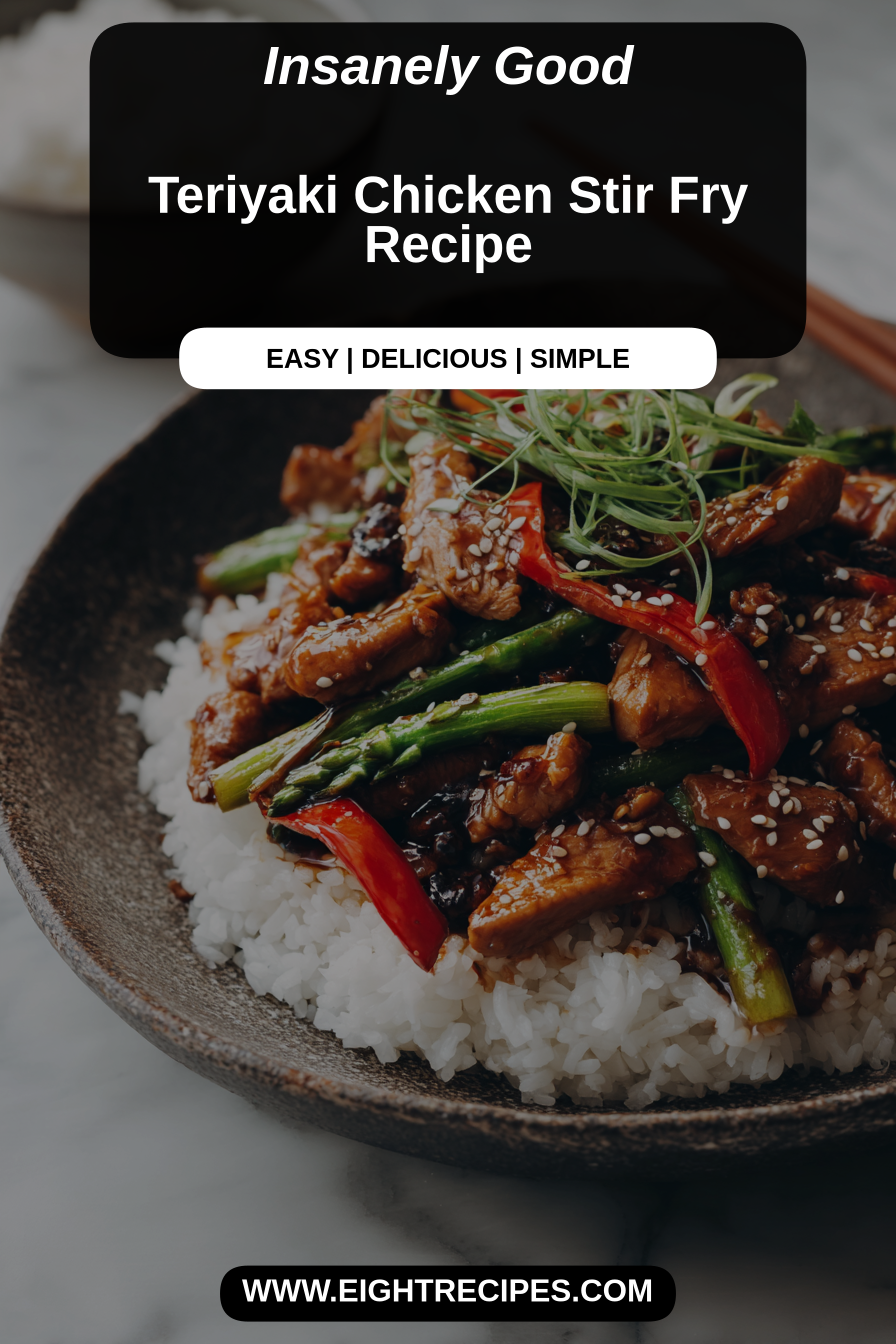
Teriyaki Chicken Stir Fry Recipe
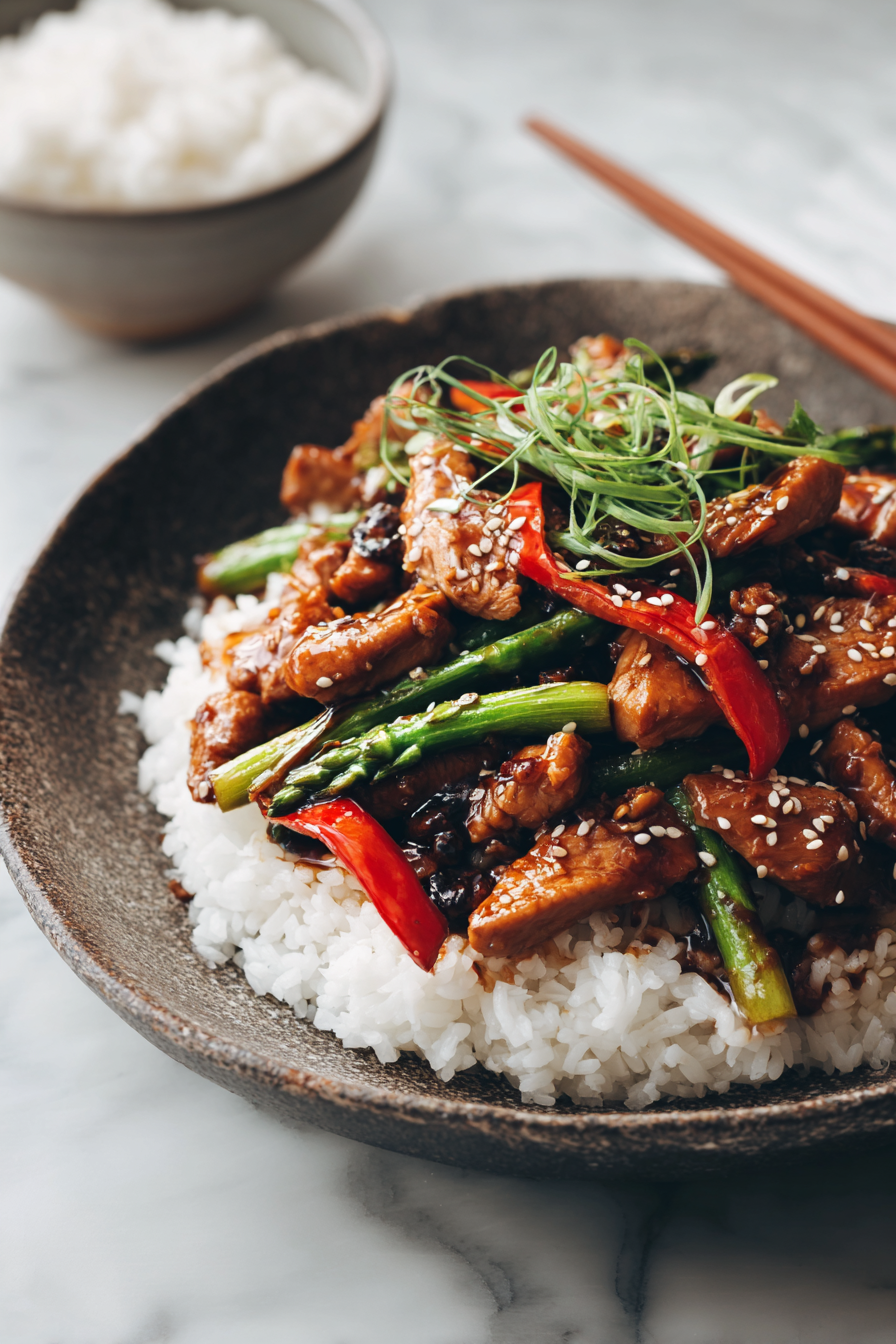
This Teriyaki Chicken Stir Fry is my go-to weeknight dinner: quick, bright, and impossibly saucy without feeling heavy. It’s a simple stir-fry of seared chicken pieces, crisp vegetables, and a glossy teriyaki-style sauce that clings to everything—easy enough for a Tuesday but special enough to make guests think you planned ahead.
My husband insists this dish be in rotation at least twice a month. He’ll text me at work: “What’s for dinner?” and if I say teriyaki chicken, he bounces through the door. Our kiddo loves piling it onto rice and adding extra green onions like it’s their own finishing ritual. It became a staple after a cold winter when we needed something both comforting and fresh—now it’s the recipe that reliably makes everyone sit down together even on the busiest nights.
Why You’ll Love This Teriyaki Chicken Stir Fry Recipe
– Satisfyingly saucy without being overly sweet: the sauce balances salty, sweet, and umami so each bite feels layered.
– Fast and forgiving: from prep to plate in about 30 minutes, and it tolerates a few shortcuts without losing flavor.
– Textural contrast: tender chicken, crisp vegetables, and a glossy sauce—every bite has interest.
– Crowd-pleaser: picky eaters and adventurous eaters both find something to like, and it scales easily for more people.
Behind the Recipe
I learned early on that the difference between okay and outstanding stir-fry is threefold: hot pan, dry chicken, and timing. Cook the chicken in batches so it browns instead of steams, and add vegetables in stages so nothing goes limp. The small things matter—a splash of sesame oil at the end, a quick cornstarch slurry to thicken the sauce, and not over-salting until the sauce reduces—these touches keep the dish bright and balanced. Also, don’t skip resting the chicken briefly after searing; it keeps the juices where they belong.
Shopping Tips
– Protein: Choose boneless, skinless chicken thighs for more flavor and forgiveness; breasts work if you prefer leaner meat but watch cook time so they don’t dry out.
– Vegetables: Bell peppers, broccoli florets, and snap peas are classic for texture—look for firm, brightly colored produce with no soft spots.
– Fresh Herbs: Green onions are an easy garnish that make a big difference; cilantro is optional if you like an herbal lift.
– Spices: Fresh ginger and garlic elevate the sauce; ground powders are okay in a pinch but won’t provide the same brightness.
– Fats & Oils: Use a neutral high-heat oil for stir-frying (canola, vegetable, or grapeseed) and keep toasted sesame oil for finishing to preserve its aroma.
Prep Ahead Ideas
– Chop all vegetables and slice the chicken the day before and store in separate airtight containers to speed assembly.
– Whisk the teriyaki sauce ingredients together and keep in the fridge for up to 48 hours; bring to room temp before using.
– Measure dry ingredients and make a cornstarch slurry in a small container labeled for quick thickening at the end.
– Prepped components will keep 1–2 days refrigerated; store the chicken on the bottom shelf in a sealed container.
Time-Saving Tricks
– Use pre-cut stir-fry vegetables or a frozen veg mix—tossed straight from the bag, they cut prep time dramatically.
– Do a full mise en place: have sauce, slurry, and garnishes lined up in small bowls before you start cooking.
– Cook rice or noodles in a rice cooker or instant pot while you stir-fry so everything finishes at the same time.
– High heat and quick tosses are faster than long, slow cooking; just don’t overcrowd the pan.
Common Mistakes
– Overcrowding the pan: I did this once and ended up steaming the chicken—always work in batches so pieces brown.
– Adding sauce too early: pouring sauce into a crowded, cold pan can make it thin and watery; wait until the pan and ingredients are hot.
– Over-thickening with cornstarch: add slurry a little at a time; it thickens quickly and you can always thin with a splash of water.
– Underseasoning: taste the sauce before adding to the pan and adjust; you can always add more, but you can’t take it away.
What to Serve It With
Serve over steamed jasmine or brown rice, alongside sesame noodles, or spooned over a bed of greens for a lighter option. A simple cucumber salad or quick pickled red onions add a bright counterpoint, and toasted sesame seeds or extra sliced scallions on top make it feel finished.
Tips & Mistakes
– Finish with a tiny drizzle of sesame oil for aroma, but don’t cook that oil—add it right at the end.
– If your sauce separates, remove from heat and whisk in a splash of hot water; heat gently to bring it back together.
– For extra crispness, spread cooked pieces on a baking sheet and briefly pop under the broiler for a minute to re-crisp before serving.
Storage Tips
Store in airtight containers in the fridge. It reheats beautifully, but if you sneak a bite cold straight from the container, it still works.
Variations and Substitutions
– Swap chicken for thinly sliced beef, pork, or firm tofu—adjust cooking times accordingly.
– Use tamari or coconut aminos for a gluten-free version, and honey or maple for a less processed sweetener.
– Add pineapple for a sweet-tart lift, but keep an eye on liquid—fresh pineapple is best to avoid excess syrup from canned fruit.
– If you prefer a thicker glaze, increase the cornstarch slightly or simmer the sauce a bit longer to reduce.