
Classic Potato Kugel Recipe
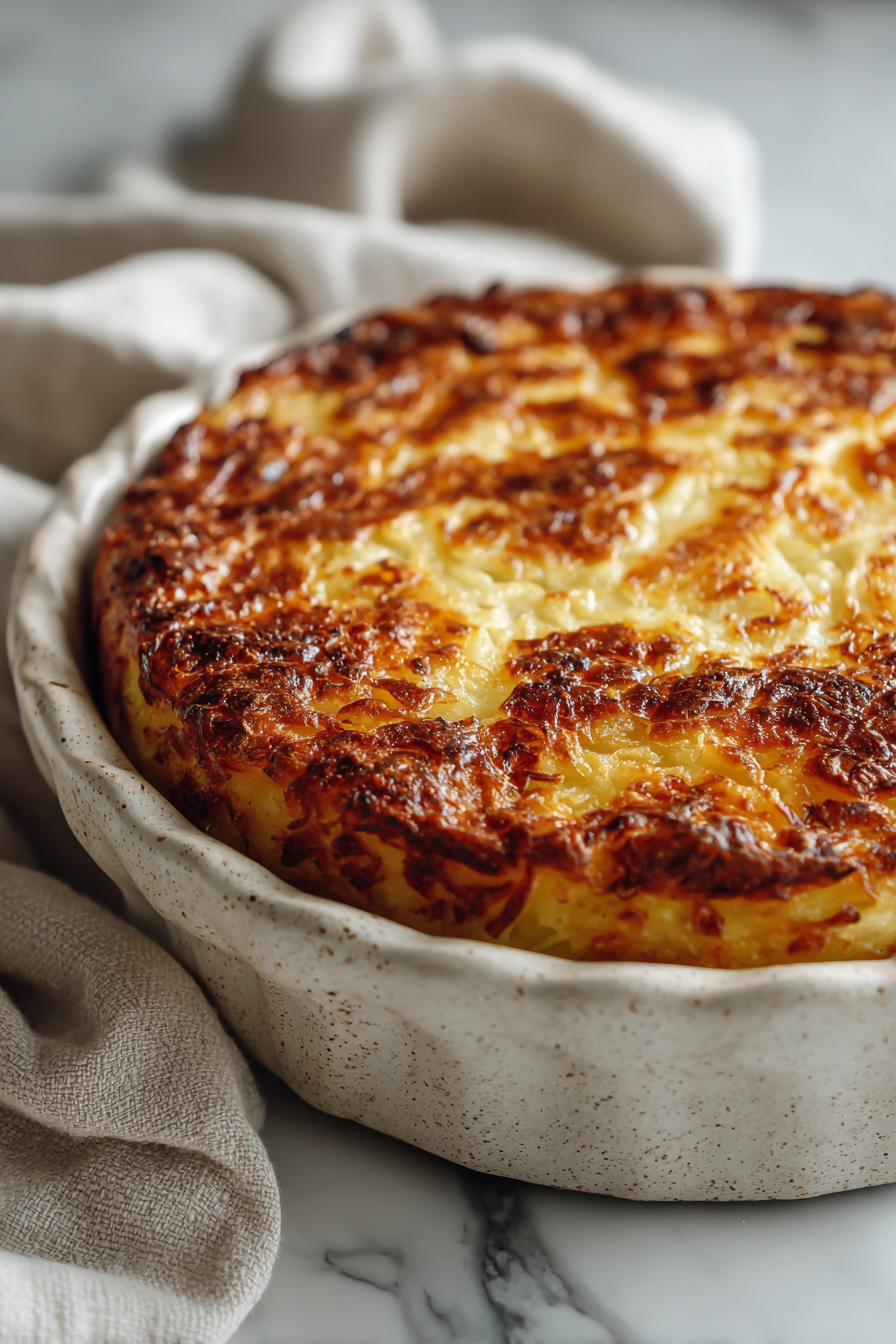
This potato kugel is the kind of comfort food that quietly steals the show—crispy, golden edges give way to a tender, savory interior flecked with caramelized onion. It’s a classic Jewish side that’s flexible enough for holiday tables and forgiving enough for a cozy weeknight when you want something warm and satisfying with minimal fuss.
My husband calls this “the crunchy casserole” and insists it’s the one thing he requests for Shabbat. Our kids will happily eat it hot straight from the oven or cold the next day, which means it often disappears before the main course does. I learned early on to make an extra pan: one for the table, one for anyone who gets distracted by dessert.
Why You’ll Love This Classic Potato Kugel Recipe
– Deeply comforting with a contrast of textures—shatteringly crisp top and soft, almost creamy interior.
– Builds flavor with simple ingredients: potatoes and onions get a little caramelization and salt to become surprisingly luxurious.
– Extremely adaptable—pareve or dairy, and easy to stretch for company without fuss.
– Holds up well for leftovers, which taste fantastic cold or reheated.
Behind the Recipe
I’ve learned that the difference between a floppy kugel and a perfect one is almost always moisture control and oven temperature. Grating and then really wringing the potatoes is tedious, but it’s the step that keeps the kugel from becoming a soggy pancake. A hot oven and a preheated pan help create that irresistible crust, and a little patience while it bakes does more than frantic poking with a fork ever will. If you’re using matzo meal, it behaves differently than flour—matzo meal gives a lighter structure and feels more traditional, while a bit of flour or even potato starch will tighten the set. Finally, don’t skip seasoning: potatoes need a confident hand with salt and pepper.
Shopping Tips
– Produce/Fruit: Choose starchy potatoes like Russets or Yukon Golds for the fluffiest interior and best crisp; avoid waxy varieties which stay gummy.
– Eggs: Look for fresh eggs (check the pack date) since they’re the primary binder; room temperature eggs blend more evenly.
– Fats & Oils: Neutral oil gives the crispiest finish, but schmaltz or butter adds extra depth—decide if you want pareve or richer flavor.
– Spices: Basic is best here—kosher salt and freshly cracked black pepper are essential; consider a pinch of nutmeg or garlic powder for a subtle lift.
– Grains/Pasta: If you’re using matzo meal, pick a fine grind; all-purpose flour or potato starch are fine substitutes if you don’t have matzo meal on hand.
Prep Ahead Ideas
– Grate the potatoes and onions the day before and keep them submerged in cold water to prevent browning; drain and pat very dry before using.
– Mix eggs, seasonings, and any dairy or oil in a jar and store covered in the fridge; whisk again before adding to the potatoes.
– Measure dry binders (matzo meal or flour) into a small container so assembly is quick—prepped components keep well for 24 hours refrigerated.
– Preheat the baking pan in the oven just before assembling if you want an extra-crispy bottom; you can do that step last-minute while the oven heats.
Time-Saving Tricks
– Use a food processor with a grating disc to blitz potatoes and onion in seconds—clean-up is worth the time saved.
– If you’re really pressed, good-quality frozen shredded potatoes (thawed and well-drained) work in a pinch; texture will be slightly different but still satisfying.
– Wring grated potatoes in a clean kitchen towel or use a potato ricer for faster liquid removal—this is the step that pays off the most.
– Make the mixture ahead and bake just before guests arrive; the kugel tolerates a little hold time and can re-crisp under a broiler if needed.
Common Mistakes
– Not removing enough liquid from grated potatoes—the result is a soggy kugel. Fix: squeeze more water out or drain off pooling liquid before baking.
– Skimping on salt. Potatoes need a firm seasoning to shine; taste your egg/seasoning mix and adjust.
– Overcrowding the pan or using a cold pan can prevent proper browning—use a shallow, preheated pan for the best crust.
– Adding too much binder (matzo meal or flour) makes the kugel heavy. If it becomes dense, thin slices and a hot broiler can help revive the crust.
What to Serve It With
Serve this kugel with roast chicken, braised brisket, or a simple green salad. I love it alongside smoked salmon and a dollop of sour cream or applesauce for a sweet-savory counterpoint.
Tips & Mistakes
– Use starchy potatoes for the classic texture; waxy ones will keep the kugel gummy.
– Don’t be shy with the heat—oven temperature and a hot pan are key for browning.
– If the top browns too fast, tent with foil to finish cooking through without burning.
Storage Tips
Store in airtight containers in the fridge. It reheats beautifully, but if you sneak a bite cold straight from the container, it still works. Reheat slices in a skillet or under a broiler to restore crispness; they’ll keep well for 3–4 days. You can also freeze portions for up to 2 months—thaw overnight in the fridge before reheating.
Variations and Substitutions
– Add grated carrot or parsnip for subtle sweetness and color.
– Stir in sautéed mushrooms or caramelized onions for deeper savoriness.
– Swap matzo meal with a little flour or potato starch if you prefer a non-traditional binder.
– For a dairy-ricotta kugel, fold in a bit of ricotta or cottage cheese for tenderness; if you want pareve, stick to oil.
– Avoid watery additions (like lots of fresh tomatoes) unless they’re cooked down first—too much moisture ruins the texture.
Write me the frequently asked questions and answers Classic Potato Kugel Recipe in the same way as the example below.