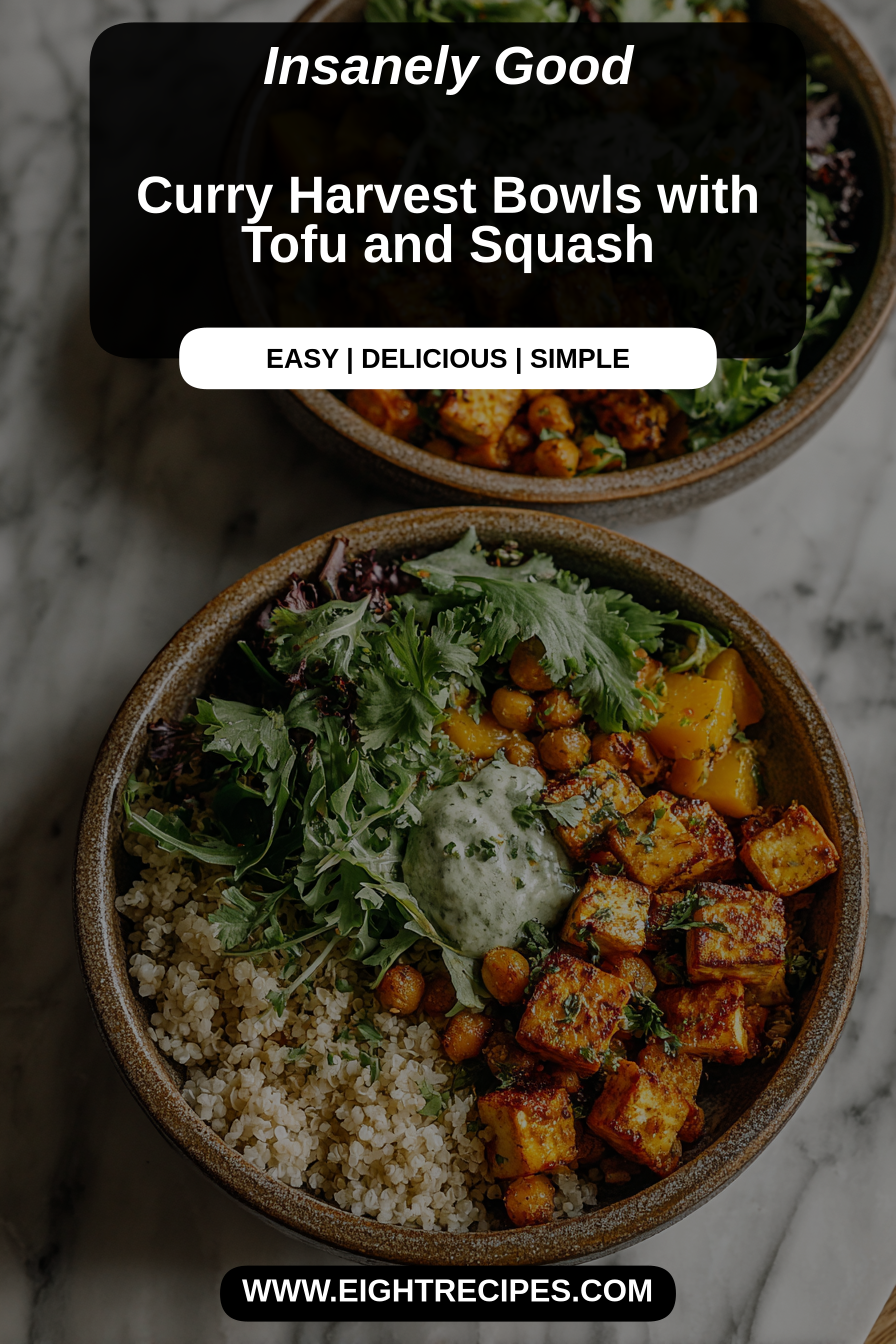
Curry Harvest Bowls with Tofu and Squash
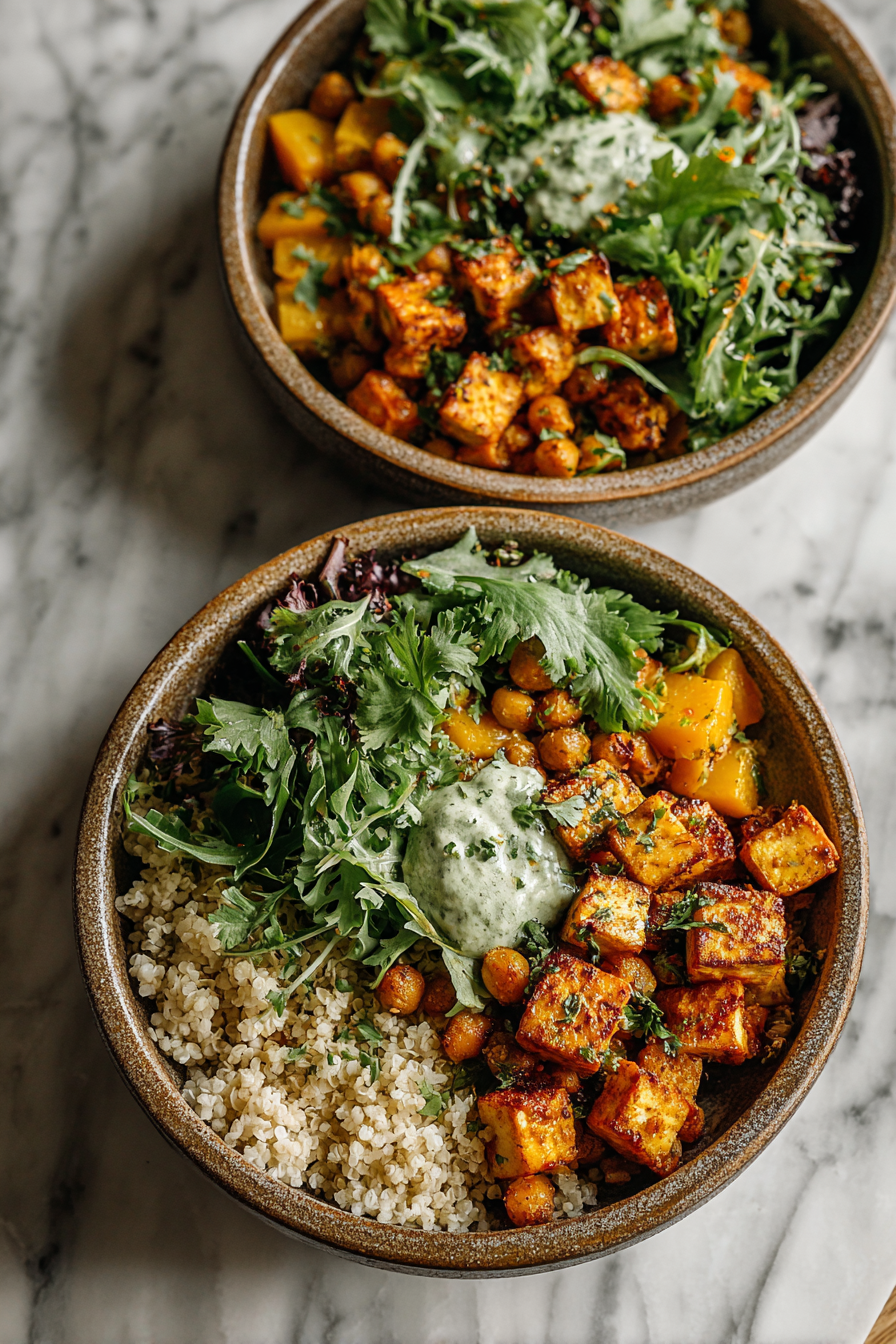
This time of year always makes me crave something warm, hearty, and deeply comforting, but I also want it to feel vibrant and full of fresh flavor. That’s exactly what these Curry Harvest Bowls with Tofu and Squash deliver. It’s a plant-powered symphony of roasted butternut squash, perfectly seasoned tofu, and a rich, aromatic curry sauce, all nestled over fluffy rice. It’s the kind of meal that feels both wholesome and indulgent, bringing together the sweetness of fall produce with the bright, warming spices of Southeast Asian cuisine. It’s a wonderful way to enjoy the bounty of the season in a bowl that truly satisfies.
My husband, Mark, can be a tough critic when it comes to plant-based meals, but this one completely won him over. I remember the first time I made it, a chilly evening after a particularly busy day. He walked into the kitchen, drawn by the incredible aromas of roasting squash and simmering curry, and eyed the tofu with a hint of skepticism. But after his first bite, his eyebrows shot up. “Okay,” he said, “this is seriously good. I could eat this every week.” And he wasn’t wrong. It quickly became our go-to for Meatless Mondays, a comforting anchor in our weekly rotation that we both look forward to. It’s hearty enough to feel substantial, but the fresh ingredients keep it from ever feeling heavy.
Why You’ll Love This Curry Harvest Bowls with Tofu and Squash
This dish is a true celebration of fall flavors, blending the sweetness of roasted squash with the warmth of curry for a comforting yet vibrant meal.
It’s incredibly satisfying and nourishing, packed with plant-based protein from the tofu and plenty of wholesome vegetables, making it a meal that truly fuels you.
The recipe is wonderfully adaptable, allowing you to easily swap in different seasonal vegetables or adjust the spice level to suit your family’s preferences.
It’s a fantastic option for meal prep, as the flavors only deepen overnight, making for delicious and easy lunches or dinners throughout the week.
Behind the Recipe
Developing this recipe has been a journey of finding the perfect balance between sweetness, spice, and creaminess. One thing I’ve learned is that pressing your tofu is absolutely non-negotiable for that fantastic crispy texture—it makes all the difference in how it absorbs the flavors and caramelizes. Another key is to really let your squash get beautifully roasted; those slightly caramelized edges bring out its natural sugars and add incredible depth. I’ve found that using a good quality red curry paste is essential for a robust flavor base, and don’t skip the fresh lime juice at the end; it truly brightens everything up and brings all the elements into harmony. The final touch of fresh cilantro or basil isn’t just for garnish; it adds a burst of freshness that cuts through the richness of the curry.
Shopping Tips
– Tofu: Opt for extra-firm or super-firm tofu. It has less water, which means less pressing for you and a better chance at achieving those delightful crispy edges.
– Squash: Butternut squash is fantastic here, but don’t hesitate to explore others like kabocha or delicata. Look for squash that feels heavy for its size and has no soft spots.
– Curry Paste: Red curry paste is my go-to for this recipe. Choose a reputable brand, and check the ingredient list for quality. A little goes a long way, so pick one you enjoy.
– Coconut Milk: Full-fat coconut milk is recommended for the creamiest, most luxurious sauce. The light versions can be a bit watery and won’t give you the same richness.
– Fresh Herbs: Cilantro is classic here, but fresh Thai basil also works beautifully. Look for vibrant, unblemished leaves and store them upright in a jar of water in the fridge.
– Citrus: Pick firm, heavy limes for maximum juice. A good squeeze of fresh lime juice at the end truly brightens the whole dish.
Prep Ahead Ideas
You can significantly streamline your dinner process by prepping a few things the day before. The squash can be peeled, seeded, and diced, then stored in an airtight container in the refrigerator. Your tofu can also be pressed, cubed, and even marinated in a little soy sauce or tamari, ginger, and garlic overnight—this really allows the flavors to penetrate deeply. You can also mince your fresh ginger and garlic ahead of time, keeping them in separate small containers. Having these components ready to go means less chopping and more assembling when it’s time to cook, making a busy weeknight feel much more relaxed.
Time-Saving Tricks
To shave off some precious minutes, consider buying pre-cut butternut squash from the produce section, though I find fresh-cut always tastes a bit better. Using a rice cooker is a hands-off way to get your grains perfectly cooked while you focus on the curry. For the tofu, after pressing, roasting it on a baking sheet while the squash cooks can speed up the crisping process compared to pan-frying. And remember, good mise en place—having all your ingredients prepped and laid out before you start—is invaluable. It eliminates frantic searching and allows for a smoother, quicker cooking flow. Sometimes, however, slowing down to let the curry simmer gently for an extra five minutes truly allows the flavors to meld beautifully, a small pause that’s always worth it.
Common Mistakes
One frequent pitfall is not properly pressing the tofu. If your tofu isn’t pressed well, it will release water during cooking, leading to soggy, unappealing pieces instead of beautifully crispy ones. Another common mistake is under-seasoning the curry base; remember to taste and adjust the salt and curry paste as you go. Overcrowding the baking sheet when roasting the squash and tofu can also lead to steaming rather than roasting, preventing that desirable caramelization. If your sauce ends up too thin, don’t panic! A quick fix is to mix a teaspoon of cornstarch with a tablespoon of cold water, then stir it into the simmering curry until it thickens.
What to Serve It With
This Curry Harvest Bowls with Tofu and Squash is incredibly satisfying on its own, but it truly shines when served over a bed of warm jasmine or brown rice. If you’re looking for something a little different, consider quinoa for an extra protein boost. For a touch of freshness and crunch, a sprinkle of toasted cashews or peanuts makes a wonderful addition. A side of warm naan bread or flaky roti is perfect for soaking up every last drop of that delicious curry sauce.
Tips & Mistakes
Storage Tips
Store in airtight containers in the fridge. It reheats beautifully, but if you sneak a bite cold straight from the container, it still works.
Variations and Substitutions
This recipe is wonderfully versatile! If you don’t have butternut squash, sweet potatoes, pumpkin, or even cauliflower florets make excellent substitutes, offering a similar sweetness and texture once roasted. For the tofu, feel free to swap it out for chickpeas, cannellini beans, or even chicken or shrimp if you’re not strictly plant-based. You can easily adjust the spice level by adding more or less curry paste, or a pinch of red pepper flakes for an extra kick. For a different flavor profile, try green curry paste instead of red, or add a handful of fresh spinach or kale at the end for extra greens. If you prefer a less rich sauce, you can use light coconut milk, though I find the full-fat version delivers the best creamy consistency.