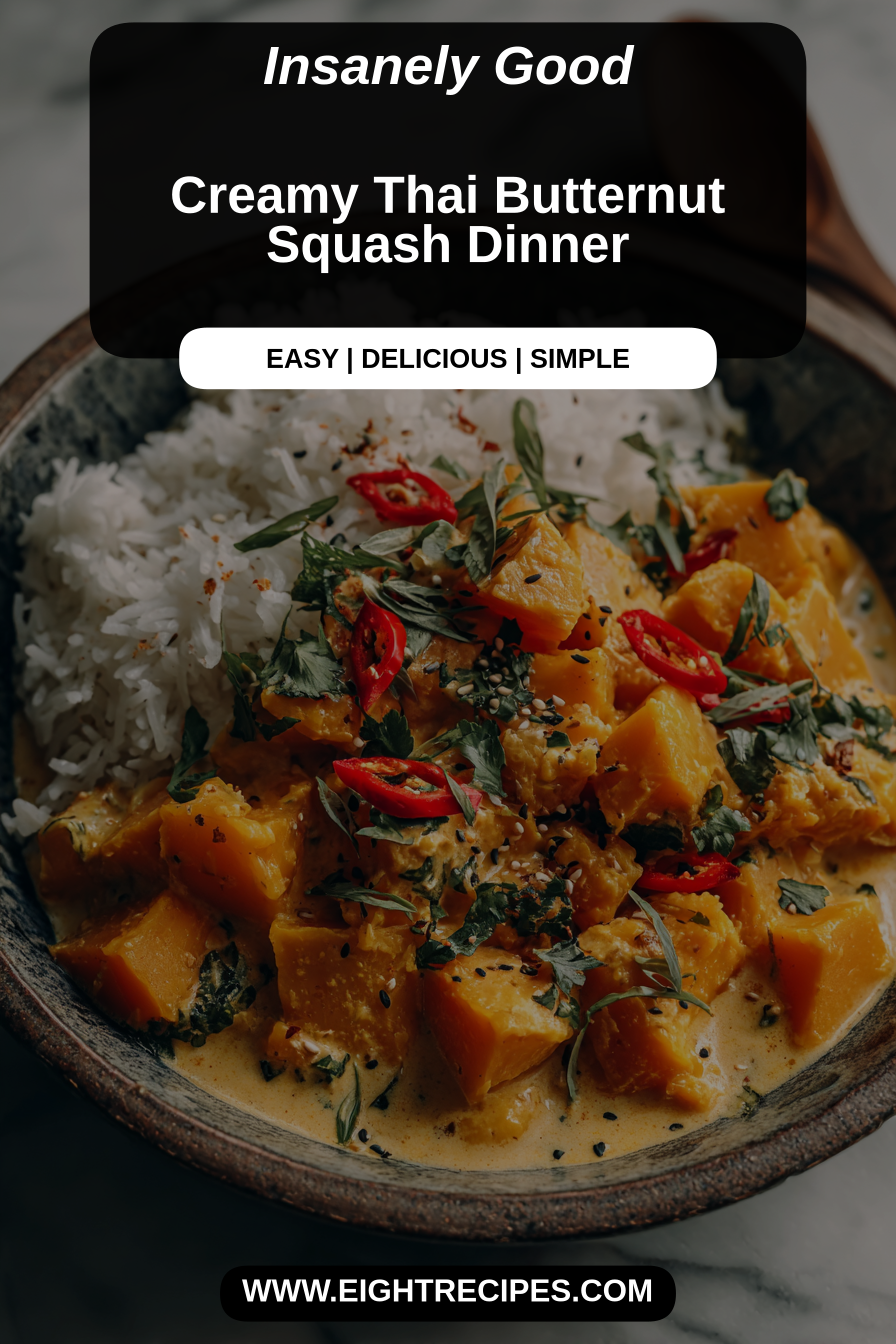
Creamy Thai Butternut Squash Dinner
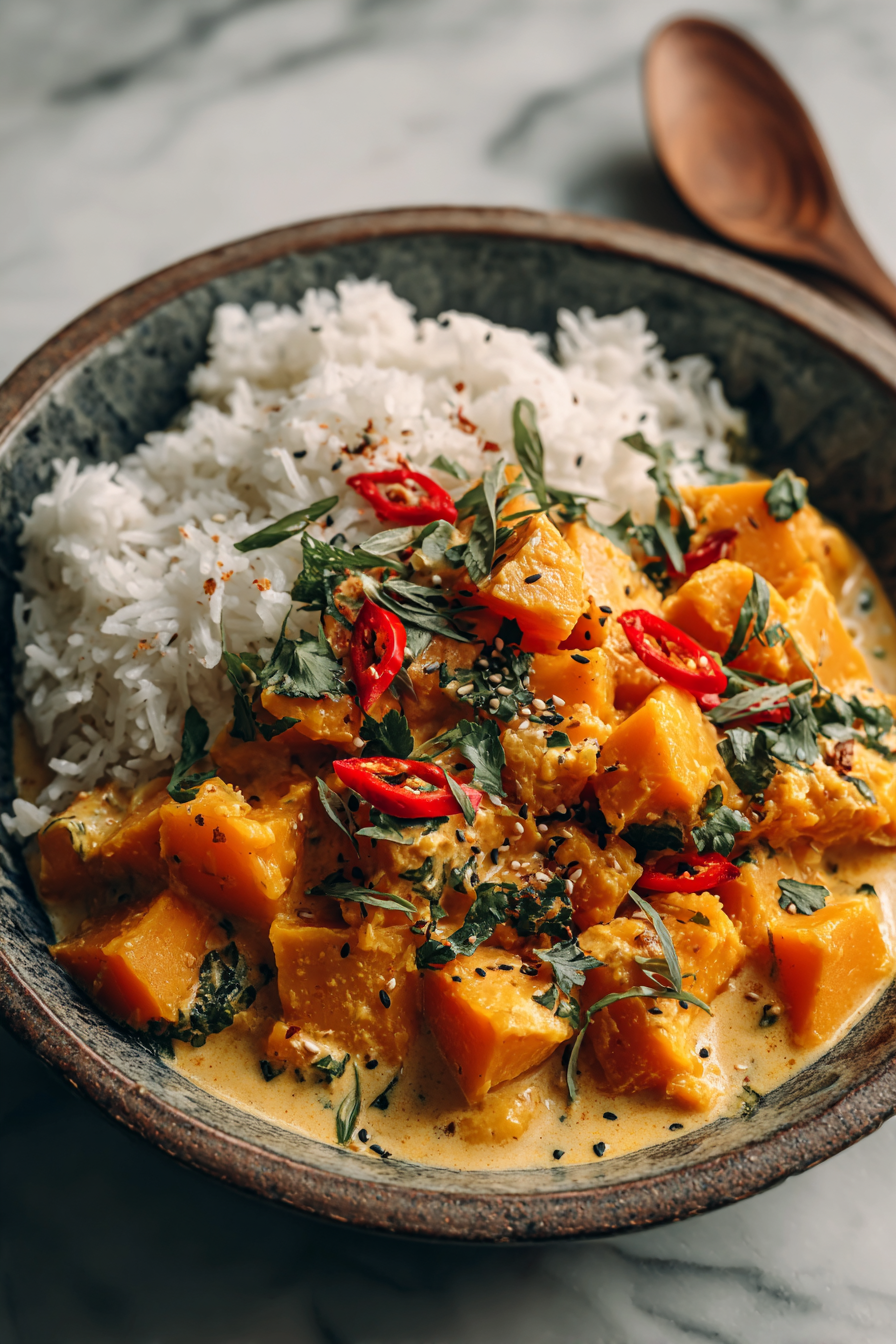
There’s something incredibly comforting about a bowl of rich, aromatic curry, and this Creamy Thai Butternut Squash Dinner hits all the right notes for a satisfying meal that feels both wholesome and indulgent. It’s a harmonious blend of tender, sweet butternut squash simmered in a creamy coconut milk broth, infused with the vibrant flavors of red curry, ginger, and lime. This dish is special because it takes a beloved fall vegetable and transforms it into an exotic, warming curry that’s surprisingly easy to make, yet tastes like it came from a specialty restaurant. If you’re looking for a recipe that brings warmth, flavor, and a touch of the extraordinary to your table, this is it.
I remember one particularly chilly Tuesday evening, after a long day of work and school pick-ups, when I hadn’t planned dinner beyond a vague notion of “something quick.” My husband, usually the first to suggest takeout, walked into the kitchen as the aroma of coconut, ginger, and roasting squash began to fill the house. His eyes lit up. “What magic are you cooking tonight?” he asked, instantly shedding the day’s stress. This dish quickly became a family favorite because it manages to be both exciting and deeply comforting. Our little one, who can sometimes be particular about new flavors, even asks for “the orange curry” now. It’s become our go-to for cozy nights in, a dish that reliably brings smiles, warmth, and a moment of shared deliciousness to our often-hectic weeknights.
Why You’ll Love This Creamy Thai Butternut Squash Dinner
You’ll fall head over heels for this Creamy Thai Butternut Squash Dinner because it truly delivers on every front.
* It’s a symphony of flavor, balancing the natural sweetness of butternut squash with the creamy richness of coconut milk, the bright tang of lime, and the subtle warmth of Thai red curry. Each spoonful is an experience.
* This dish is surprisingly versatile and forgiving. Whether you’re a seasoned cook or just starting out, the steps are straightforward, and it adapts beautifully to what you have on hand, making it a stress-free option for any night.
* It’s incredibly satisfying without being heavy, packed with nourishing vegetables and fragrant spices that will leave you feeling comforted and well-fed, without the post-meal sluggishness.
* Not only is it delicious hot off the stove, but it also tastes even better the next day, making it an ideal candidate for meal prepping. Enjoying it for lunch the following day is one of my favorite kitchen perks.
Behind the Recipe
Making this creamy Thai butternut squash dinner at home has taught me so much about building layers of flavor. One key learning is the importance of properly roasting the butternut squash first; it brings out a deep sweetness and nuttiness that simmering alone can’t achieve, adding a vital dimension to the curry. Another little touch that makes it shine is taking the time to toast your curry paste in a bit of oil before adding the coconut milk. This step “wakes up” the spices, releasing their full aromatic potential and creating a richer, more complex broth. I’ve found that people often trip up by not tasting and adjusting the seasoning at the end—a squeeze of fresh lime, a touch more fish sauce or soy sauce, or a pinch of sugar can truly elevate the final dish from good to unforgettable. Don’t be afraid to tweak it to your personal preference!
Shopping Tips
– Produce: Choose a firm, unblemished butternut squash. Look for one that feels heavy for its size, indicating good moisture content.
– Canned Goods: Opt for full-fat coconut milk; it yields a much creamier, richer sauce than the light version. Good quality Thai red curry paste makes all the difference; I often gravitate towards brands like Mae Ploy or Aroy-D.
– Fresh Herbs: A generous bunch of fresh cilantro is essential for garnish and adds a vibrant, fresh counterpoint to the rich curry. Look for bright green, perky leaves.
– Spices: If you can find it, a good quality palm sugar provides a nuanced sweetness, but regular brown sugar works beautifully too.
– Aromatics: Fresh ginger and garlic are non-negotiable here; their pungent, warm notes form the backbone of the flavor.
– Grains: Jasmine rice is my preferred accompaniment. Its delicate fragrance and fluffy texture are the perfect canvas for the curry.
Prep Ahead Ideas
You can definitely get a head start on this dish. The butternut squash can be peeled, seeded, and cubed a day or two in advance, stored in an airtight container in the fridge. Similarly, your onion, garlic, and ginger can be minced and kept in separate small containers. This kind of prep ahead is a lifesaver on busy weeknights, cutting down active cooking time significantly and making dinner feel almost effortless.
Time-Saving Tricks
For a truly speedy dinner, consider buying pre-cut butternut squash, though I always prefer to cut my own for freshness. Another trick is to use pre-minced garlic and ginger in a pinch, but fresh is always best if you have a few extra minutes. When it comes to the rice, using a rice cooker is a hands-off approach that guarantees perfect results every time. While you might be tempted to rush the roasting of the squash, allowing it to caramelize properly will genuinely improve the overall flavor and texture of your curry, so don’t skip that step!
Common Mistakes
A common pitfall I’ve seen is not allowing the curry paste to properly sauté with the aromatics before adding liquids. This crucial step deepens the flavor. Another mistake is forgetting to taste and adjust at the end – a dash of fish sauce, a squeeze of lime, or a pinch of sugar can completely transform the dish from bland to brilliant. Don’t be afraid to trust your palate! Finally, avoid overcooking the butternut squash; you want it tender, not mushy.
What to Serve It With
This creamy Thai butternut squash dinner is absolutely perfect served over fluffy jasmine rice, which soaks up all the delicious sauce. For an extra touch, I often offer a side of warm naan bread to scoop up any remaining curry. A sprinkle of extra fresh cilantro and a wedge of lime for a final squeeze are essential garnishes that truly brighten the dish. If you like a little extra texture, a scattering of toasted peanuts or cashews adds a lovely crunch.
Tips & Mistakes
Always remember that cooking is an art of adjustment. Taste your curry throughout the process, especially before serving, to ensure the balance of sweet, sour, salty, and spicy is just right for your preference. Don’t be shy with fresh ingredients like lime and cilantro; they provide a burst of freshness that cuts through the richness beautifully.
Storage Tips
Store in airtight containers in the fridge. It reheats beautifully, but if you sneak a bite cold straight from the container, it still works.
Variations and Substitutions
This recipe is very flexible! If you’re not a fan of butternut squash, sweet potato or even pumpkin work wonderfully. For a protein boost, add chickpeas, firm tofu cubes, or even sliced chicken breast during the simmering phase. If you need a completely vegan dish, ensure your red curry paste doesn’t contain shrimp paste (many brands offer vegan options) and use soy sauce or tamari instead of fish sauce. For a spicier kick, add a pinch of red pepper flakes or an extra spoon of curry paste. Conversely, if you’re sensitive to heat, start with less curry paste and add to taste. Coconut aminos are a great gluten-free and soy-free alternative to soy sauce for that umami depth.