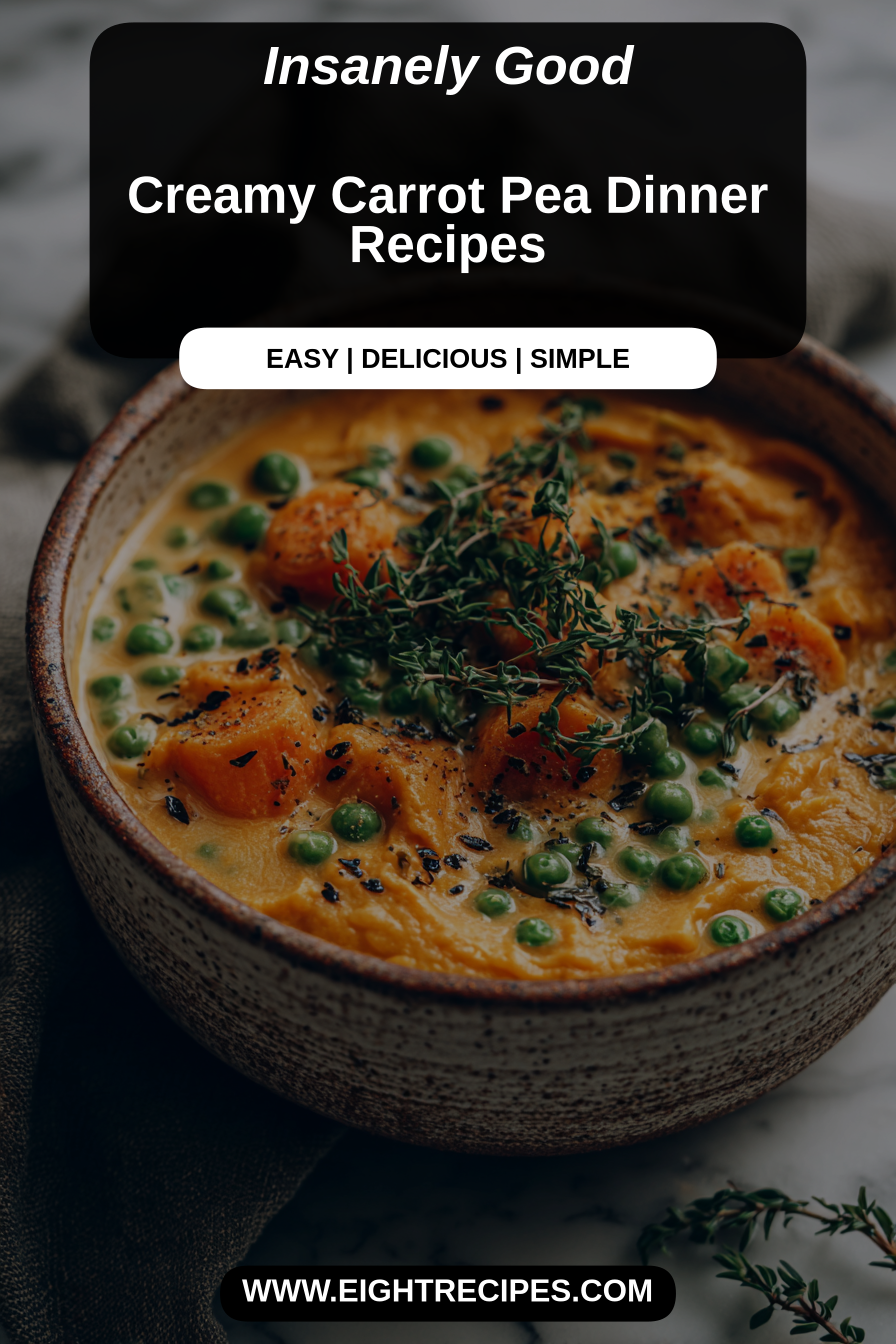
Creamy Carrot Pea Dinner Recipes
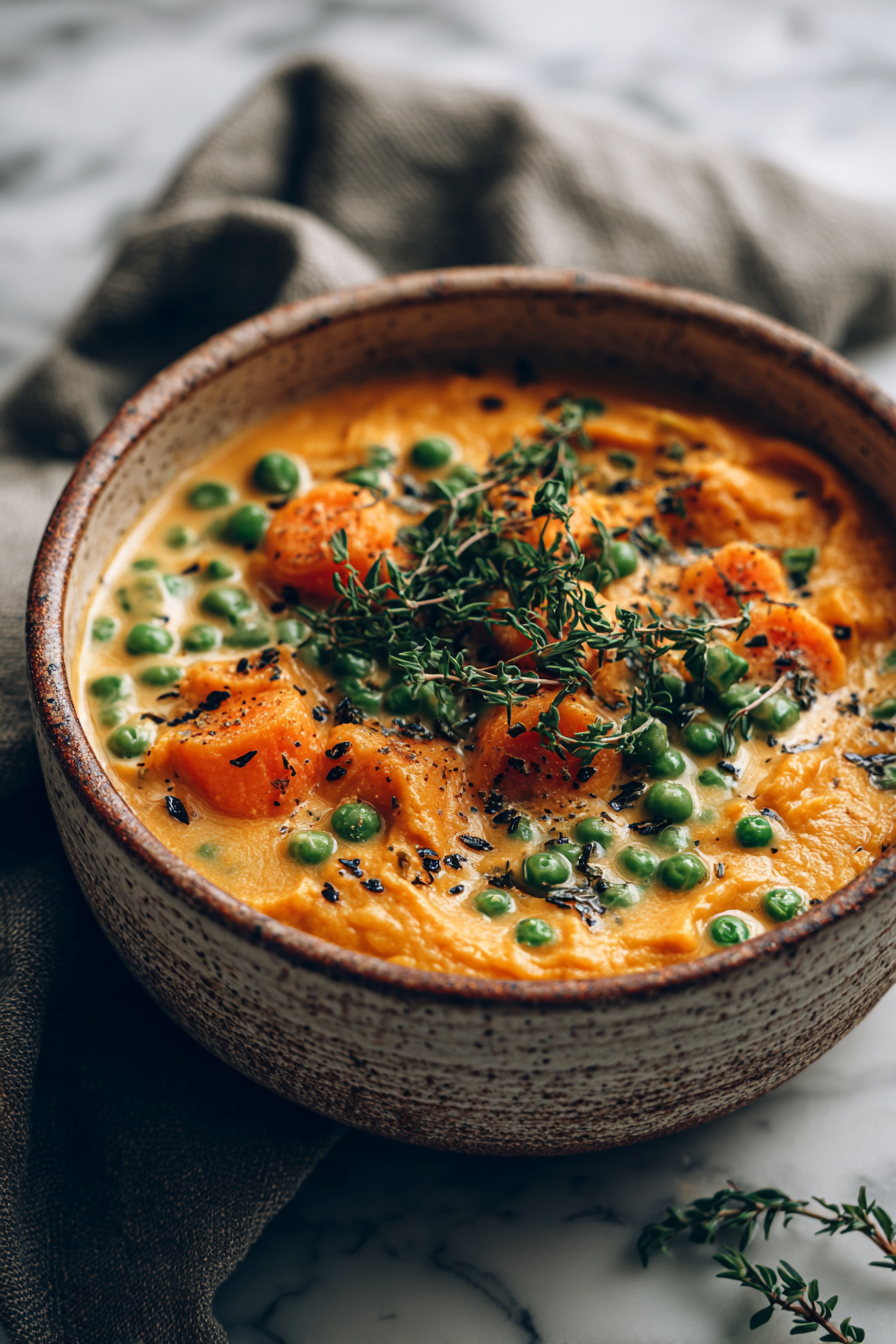
This dish truly is a weeknight marvel, a symphony of simple ingredients that come together in the most comforting way. Imagine tender carrots and vibrant peas, enveloped in a rich, creamy sauce that’s both deeply satisfying and surprisingly light. It’s a recipe that speaks to the soul, perfect for those evenings when you crave something warm and nourishing without spending hours in the kitchen, offering a delightful balance of familiar flavors and comforting textures.
My husband, Mark, can be a tough critic when it comes to vegetable-focused meals, but this creamy carrot and pea dinner won him over from the very first bite. I remember the first time I made it; our little one, usually wary of anything green, was fascinated by the bright colors. Mark, after a long day, just kept saying, “This is really good. Really, really good.” It’s become our go-to for cozy evenings, a recipe I pull out when we need something quick, wholesome, and guaranteed to bring smiles around the table. It’s more than just food; it’s a moment of peace in our busy lives, a comforting hug in a bowl that always feels like coming home.
Why You’ll Love This Creamy Carrot Pea Dinner Recipes
This dish is pure comfort, delivering a hug in a bowl with its rich, velvety sauce and tender vegetables, making it utterly irresistible on any chilly evening.
It’s incredibly versatile and adaptable, allowing you to easily adjust ingredients based on what you have on hand or what dietary preferences you need to accommodate.
You’ll appreciate how quickly this recipe comes together, making it an ideal choice for busy weeknights when you need a satisfying and wholesome meal without fuss.
It’s a fantastic way to incorporate more vegetables into your diet in a delicious and appealing manner, especially for those who might be hesitant about plain veggies.
The familiar, nostalgic flavors evoke a sense of home cooking, yet the recipe is elevated enough to feel special, striking a perfect balance between simple and gourmet.
Behind the Recipe
Creating a truly great creamy carrot and pea dish comes down to a few key elements that I’ve learned through many iterations. The biggest “aha!” moment for me was realizing the importance of developing flavor early on—don’t rush the sautéing of your aromatics. Giving the onions and garlic time to soften and become fragrant lays a beautiful foundation for the entire dish. Another common challenge is getting the sauce consistency just right. I’ve found that whisking in your thickener (whether it’s flour or cornstarch) slowly and ensuring it’s fully incorporated before adding liquids prevents lumps. Overcooked vegetables are a definite no-no here; nobody wants mushy carrots. I like to add the peas towards the very end of cooking, just long enough for them to warm through and retain their vibrant color and slight snap. A little touch of fresh dill or parsley at the end really brightens everything up and adds a lovely herbaceous note that pulls the whole dish together.
Shopping Tips
– Vegetables: Look for firm, bright orange carrots. I often opt for organic if available. For peas, frozen is perfectly fine here and often more convenient and sweeter than fresh out of season.
– Dairy: If using dairy, a good quality heavy cream or whole milk will give you the richest, most decadent sauce. For a lighter touch, you can use half-and-half.
– Aromatics: A yellow onion and fresh garlic cloves are essential for building a flavorful base. Opt for firm, unblemished onions and garlic.
– Fats & Oils: Unsalted butter or a good quality olive oil for sautéing. If you’re using salted butter, just be mindful of how much additional salt you add later.
– Fresh Herbs: Fresh dill or parsley makes a world of difference for a bright, finishing touch. Look for vibrant, unwilted bunches.
– Spices: Ensure your black pepper is freshly ground for the best flavor, and a tiny pinch of nutmeg can add surprising depth to creamy dishes.
Prep Ahead Ideas
You can significantly streamline your dinner prep by getting a few things ready in advance. Chop your carrots into even pieces, dice the onion, and mince your garlic the day before. Store these prepped vegetables in separate airtight containers in the refrigerator. This way, when it’s time to cook, you’re just a few simple steps away from a delicious meal, which is a lifesaver on busy weeknights.
Time-Saving Tricks
To truly cut down on cooking time without sacrificing flavor, consider using pre-chopped onions and minced garlic from the produce section, or even frozen pre-diced carrots if you’re in a real pinch. While fresh is always lovely, these shortcuts maintain quality for this kind of dish. Also, having your vegetable broth and cream measured out before you start sautéing everything ensures a smooth, continuous cooking process. Sometimes, though, slowing down slightly to let the aromatics properly caramelize or allowing the sauce to gently simmer for a few minutes truly improves the depth of flavor.
Common Mistakes
One of the most common pitfalls with creamy vegetable dishes is overcooking the vegetables, particularly the carrots. They can quickly turn from tender-crisp to mushy if left on the heat for too long, losing both their texture and vibrant color. I once let my carrots simmer too long and ended up with a rather unappealing, soft texture. Another mistake is ending up with a sauce that’s too thin or too lumpy; ensure your thickener is fully dissolved before adding liquids gradually. Finally, under-seasoning can leave the dish tasting bland. Always taste and adjust salt, pepper, and herbs throughout the cooking process. If your sauce is too thin, a quick cornstarch slurry (cornstarch mixed with a little cold water) can rescue it; if too thick, a splash more broth or milk will thin it out.
What to Serve It With
This creamy carrot and pea dinner is wonderfully versatile. It shines beautifully on its own as a light vegetarian meal, but also pairs exceptionally well with a variety of sides. Think fluffy rice, egg noodles, or even a hearty quinoa. For a more complete meal, consider serving it alongside roasted chicken or pan-seared fish. And, of course, a warm, crusty baguette for soaking up every last drop of that delicious sauce is always a winner in our home.
Tips & Mistakes
Storage Tips
Store in airtight containers in the fridge. It reheats beautifully, but if you sneak a bite cold straight from the container, it still works.
Variations and Substitutions
This recipe is wonderfully forgiving and open to interpretation. For a dairy-free version, swap the heavy cream or milk for a full-fat coconut milk or a plant-based cream alternative like cashew cream; the consistency will be similar, though the flavor profile will shift slightly. You can easily add more vegetables—diced potatoes, corn, or even a handful of spinach stirred in at the end would be delightful. If you want to boost the protein, cooked shredded chicken, chickpeas, or white beans make excellent additions. For a different herb profile, fresh thyme or chives can be lovely instead of dill or parsley. While tempting to use dried herbs, fresh really makes a difference here for brightness, so I’d recommend sticking to fresh if possible.