
Creamy Chicken Mushroom Stroganoff
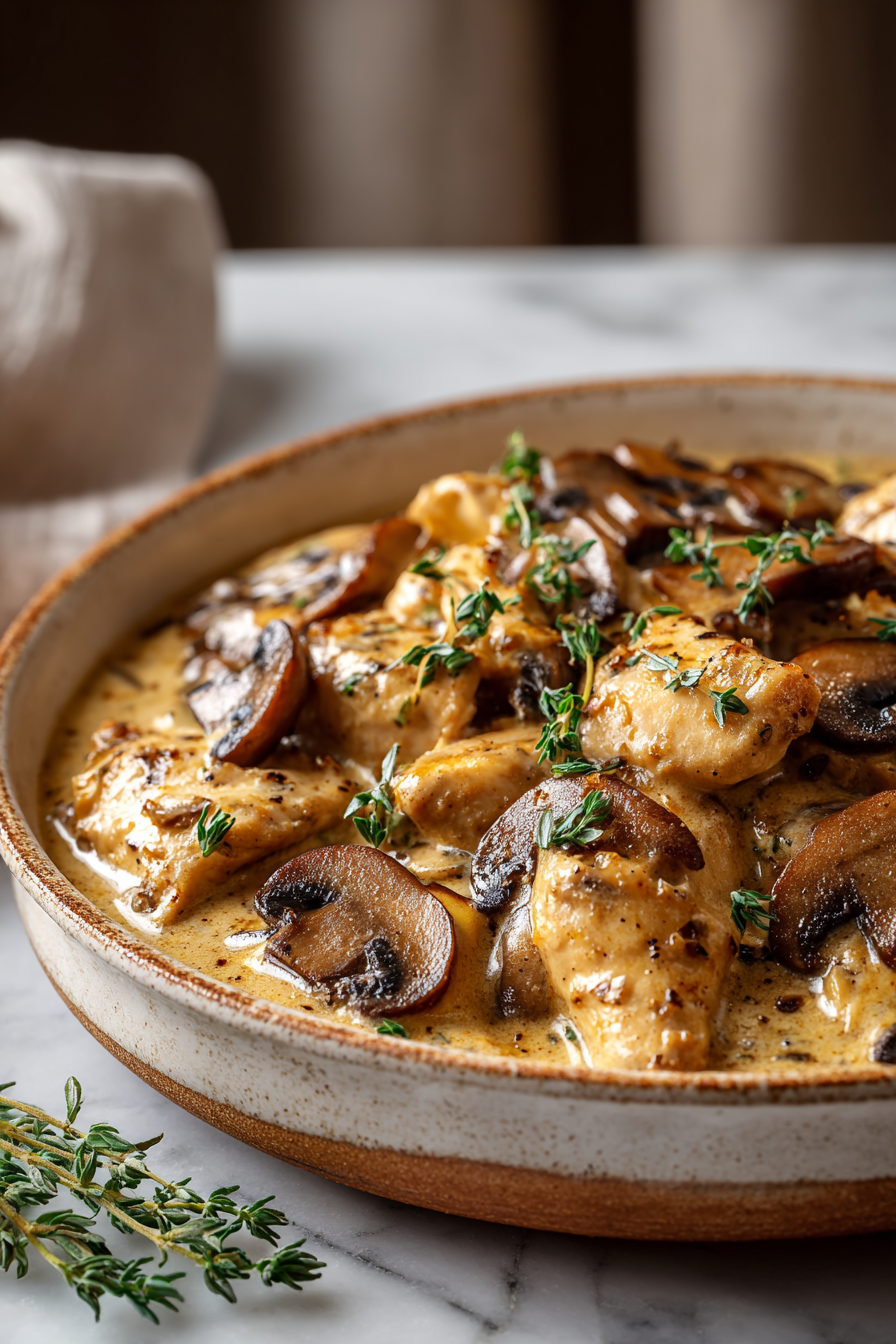
This creamy chicken mushroom stroganoff is the kind of dish that feels like a warm, well-worn sweater for dinner: rich, comforting, and surprisingly bright where it counts. Tender strips of chicken and browned mushrooms swim in a silky, tangy sauce—sour cream and a splash of mustard giving it that classic stroganoff lift—served over buttered egg noodles or mashed potatoes for maximum comfort.
My husband jokes that I have a “signature weeknight move,” and this is it. On hectic evenings I’ll pull a few simple ingredients from the fridge and in under 30 minutes we’ve got a plate of something that tastes like I spent all afternoon on it. Our toddler is now at the point where she forks mushrooms into her mouth like tiny trophies, and our dog somehow knows the sound of the skillet hitting the stove. It’s become one of those family staples that shows up whenever we need something reliably cozy.
Why You’ll Love This Creamy Chicken Mushroom Stroganoff
– Classic comfort but lighter: the sauce is creamy and satisfying without being overly heavy, especially if you use a light sour cream or blend in a little Greek yogurt.
– Weeknight-quick: cooks fast—browning the chicken and mushrooms is the longest part—so it’s perfect for busy evenings.
– Flexible carrier: delicious over egg noodles, rice, mashed potatoes, or even a bed of steamed greens if you’re watching carbs.
– Crowd-pleasing flavor profile: the tang from sour cream and a touch of Dijon or Worcestershire gives depth that folks keep asking for seconds of.
Behind the Recipe
I learned early on that the difference between a flat, watery stroganoff and one that sings is twofold: proper browning and restrained liquid. Browning the chicken and mushrooms builds flavor, and reducing the pan juices before adding dairy prevents a separated or thin sauce. I also discovered that finishing with cold sour cream off the heat keeps the texture smooth. Little touches—toast the mustard seeds briefly, scrape up the fond from the pan, add a splash of white wine or a spoonful of Dijon—make the flavor layered without complicating the process. Don’t rush the browning stage, but you also don’t need to fuss over it: medium-high heat and patience are your friends.
Shopping Tips
– Protein: Choose boneless, skinless chicken thighs or breasts depending on preference—thighs stay juicier and are more forgiving on reheating.
– Vegetables: Buy firm, dry mushrooms (cremini or baby bella are great); avoid soggy or damp packages which indicate age.
– Dairy: Use full-fat sour cream for the creamiest result, or swap in Greek yogurt for a tangy, lower-fat alternative—add off heat to avoid curdling.
– Grains/Pasta: Egg noodles are classic; pick fresh or good-quality dried noodles and salt the cooking water well for best flavor.
– Fresh Herbs: Fresh parsley or chives brighten the finished dish—buy a small bunch and chop right before serving for the most impact.
Prep Ahead Ideas
– Slice mushrooms and dice the chicken the day before; store each in separate airtight containers in the fridge for up to 24 hours.
– Measure out spices and grate any onion or garlic into a small container so everything goes into the pan smoothly.
– You can mix together the sauce base (stock + mustard + seasoning) and refrigerate; warm it briefly and stir in sour cream at the end.
– Pre-cooked noodles or mashed potatoes can be kept in the fridge up to 2 days and quickly reheated in a splash of butter.
Time-Saving Tricks
– Use thinly sliced chicken or cutlets to reduce cooking time—no long searing required.
– Buy pre-sliced mushrooms and pre-chopped onions if you’re short on time; they still brown nicely if patted dry.
– Cook the pasta while the chicken and mushrooms sear to keep everything efficient; keep a bowl of hot water nearby to maintain temperature if needed.
– Do a simple one-pan method by cooking chicken first, removing it, then finishing sauce in the same pan—fewer dishes, more flavor.
Common Mistakes
– Overcrowding the pan: pack in too many mushrooms or chicken pieces and they’ll steam instead of brown; work in batches if needed.
– Adding sour cream to a boiling sauce: high heat can cause separation; remove the pan from the heat and temper the dairy in gently.
– Under-seasoning: creamy sauces need a confident hand with salt and acid—finish with a squeeze of lemon or a splash of Worcestershire if it tastes flat.
– Watery sauce: don’t skip the reduction step; simmer to concentrate flavors before stirring in the dairy, or thicken with a small cornstarch slurry if needed.
What to Serve It With
Serve over buttered egg noodles for the classic approach, or spoon it atop creamy mashed potatoes for an extra-comforting plate. For lighter meals, a mound of cauliflower mash or a bed of steamed green beans complements the richness nicely.
Tips & Mistakes
– If your noodles clump, toss them with a little butter or reserved pasta water to loosen.
– Don’t serve immediately straight from a boiling pan—let the sauce rest for a minute to thicken and meld.
– If the sauce feels flat after cooling, reheat gently and add a splash of lemon juice or a teaspoon of Dijon to brighten.
Storage Tips
Store in airtight containers in the fridge. It reheats beautifully, but if you sneak a bite cold straight from the container, it still works. For longer storage, freeze in meal-sized portions for up to 3 months; thaw overnight in the fridge and reheat gently on the stove with a splash of stock.
Variations and Substitutions
– Mushroom swap: cremini, button, or a mix including shiitake or porcini all work—more intense mushrooms give more umami.
– Dairy options: sour cream is classic; plain Greek yogurt or crème fraîche can substitute, but fold in off heat to avoid curdling.
– Protein swaps: turkey or beef strips work well; for a vegetarian version, use seared tempeh, firm tofu, or additional mushrooms and a splash of soy sauce for depth.
– Thickening: if you prefer a thicker sauce, whisk a teaspoon of cornstarch with cold water and simmer briefly until glossy.