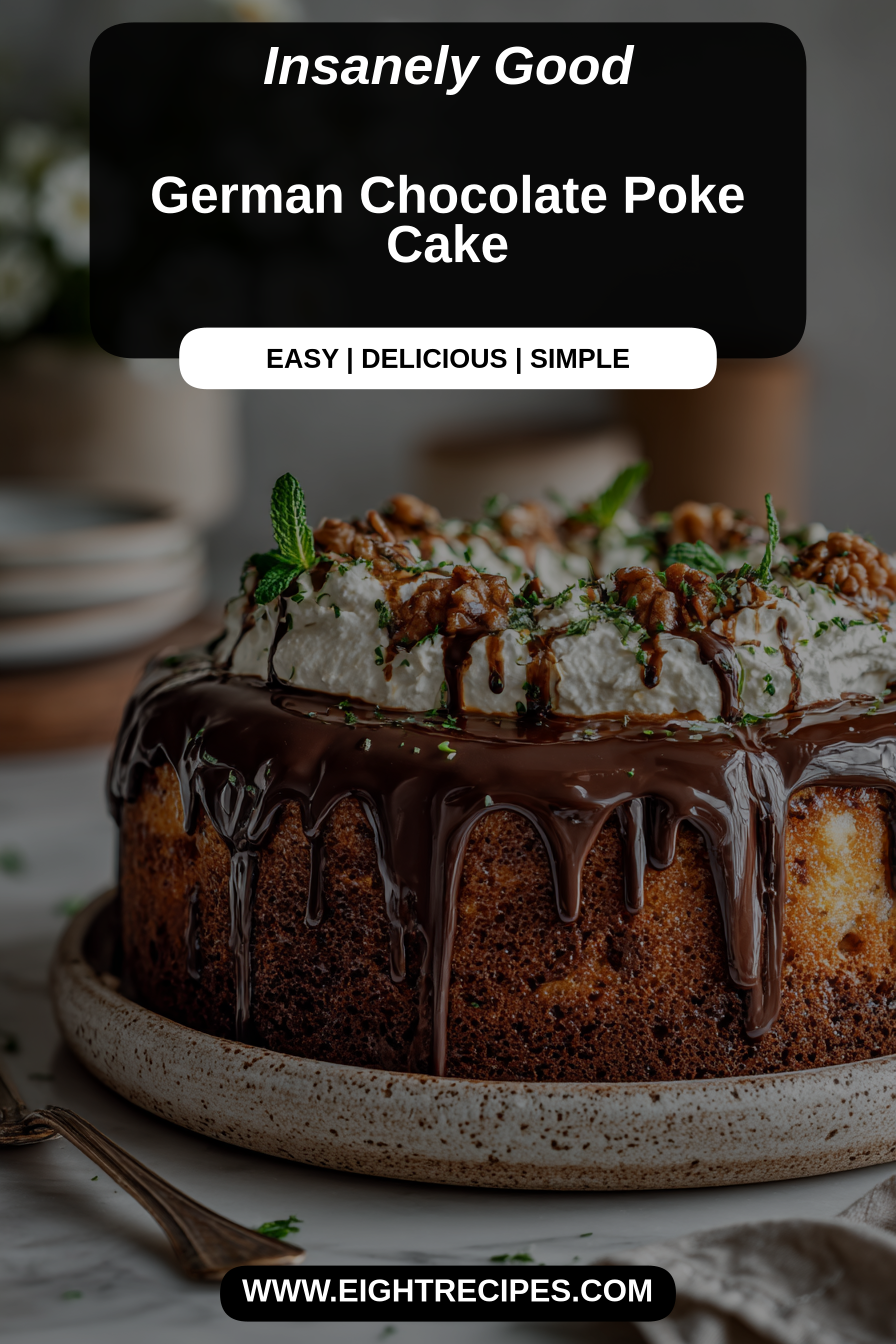
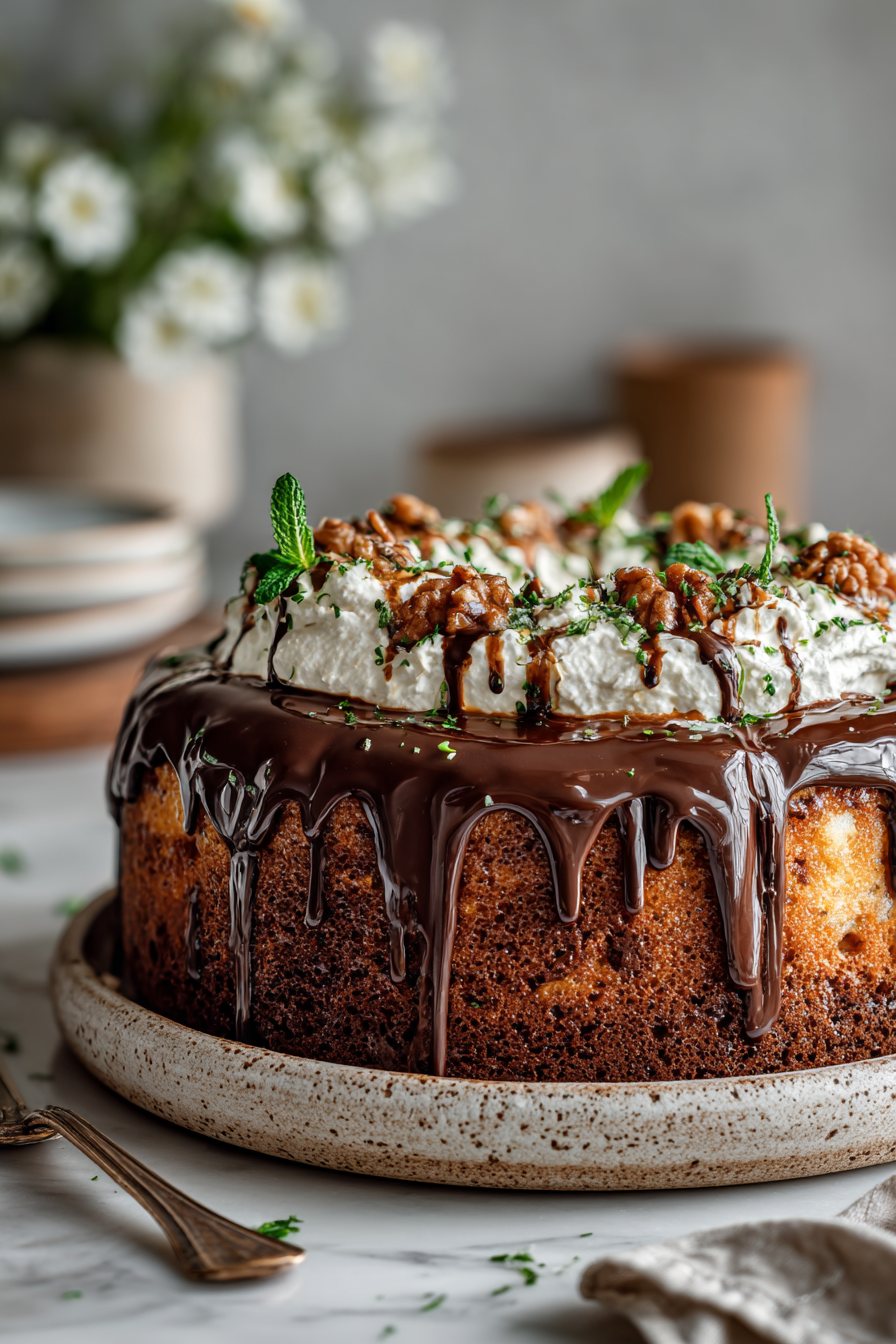
German Chocolate Poke Cake
This German Chocolate Poke Cake is a nostalgic, one-pan kind of dessert: a moist chocolate cake studded with little wells that soak up a sweet coconut-pecan filling and a glossy chocolate topping. What sets it apart is that contrast—the fudgy chocolate base, the gooey, toasted coconut-pecan pockets, and a silky chocolate finish—so every forkful feels a little indulgent and very comforting.
My husband is the unofficial dessert critic in our house, and this is one of the few sweets that gets an enthusiastic “save me a slice” before the platter even leaves the counter. It became a go-to for birthdays and last-minute potlucks because it’s forgiving, always crowd-pleasing, and somehow tastes like extra love in cake form. I still remember the first time I poked the cake and thought, “This is either going to be genius or a mess”—it was genius, and now it’s a staple when I want a fuss-free dessert that feels special.
Why You’ll Love This German Chocolate Poke Cake
– Deep, chocolatey base that stays moist—no dry cake drama here.
– Little pockets of coconut-pecan filling that add texture and a caramel-like sweetness.
– Easy to scale for a crowd and simple enough for weeknight bakers who want to impress.
– Great make-ahead dessert: flavors mellow and meld overnight for an even better result.
Behind the Recipe
This recipe grew out of wanting the classic flavors of German chocolate cake without a long, fussy frosting session. The poke step is the secret: you make gaps that capture the coconut-pecan filling so every bite hits both chocolate and that toasty-sweet component. Pay attention to the temperature of the cake before you pour in the filling—too hot and it will run out; cool it just enough so the filling sinks into the pockets but doesn’t disappear entirely. Toasting the coconut and lightly browning the pecans before folding them into the filling lifts the whole thing from good to memorable.
Shopping Tips
– Baking Basics: Choose a reliable cocoa and flour for consistent texture—a midrange dutch-processed cocoa gives richness without bitterness.
– Chocolate: Use a good-quality baking chocolate or chips for the topping; semisweet balances the coconut filling nicely.
– Dairy: Pick full-fat milk or cream when the recipe calls for it—it gives the topping a silkier finish.
– Nuts & Seeds: Fresh pecans make a difference—opt for shelled, unsalted pecans and toast them briefly for the best flavor.
– Flavor Boosts: Pure vanilla extract and a pinch of flaky salt elevate the sweetness; real vanilla is worth the small splurge.
Prep Ahead Ideas
– Bake the cake a day ahead and cool completely before wrapping tightly; the flavors deepen overnight.
– Make the coconut-pecan filling in advance and store it in an airtight container in the fridge; gently warm before spooning over the cake.
– Measure dry ingredients and sift cocoa earlier in the day to speed assembly; keep prepped items in labeled bowls so you can focus on timing.
Time-Saving Tricks
– Use a reliable boxed cake mix if you’re short on time—then focus effort on the homemade filling and topping.
– Toast the coconut and pecans together on a sheet pan while the oven is preheating to multitask efficiently.
– Keep a small offset spatula or spoon handy for precise filling placement so you don’t over-saturate the cake in one spot.
– When you do have time, chilling briefly before slicing makes cleaner slices, so sometimes slowing down improves presentation.
Common Mistakes
– Over-poking or poking too soon: If the cake is too warm, the filling just runs across the surface instead of settling into pockets—cool it until just warm to the touch.
– Using un-toasted coconut/pecans: Untoasted mix-ins can taste flat; a quick toast brings out oils and aroma.
– Skimping on the topping: A thin or grainy chocolate topping can leave the cake texturally off—use warm, smooth chocolate and a splash of cream if needed to emulsify.
– I once poured the filling right after the cake came out of the oven and ended up with a soggy mess; letting it cool for a short while saved it the next time.
What to Serve It With
Serve this with a dollop of whipped cream or a scoop of vanilla ice cream to cut through the sweetness. Fresh berries on the side add a bright contrast, and a small espresso or strong coffee pairs beautifully for after-dinner indulgence.
Tips & Mistakes
– For cleaner slices, chill the cake for at least 30 minutes before cutting.
– If the topping seizes or becomes grainy, gently warm it with a teaspoon of cream and stir until smooth.
– Don’t overcrowd the toasted coconut and pecans while toasting—give them a bit of space so they brown evenly.
Storage Tips
Store in airtight containers in the fridge. It reheats beautifully, but if you sneak a bite cold straight from the container, it still works.
Variations and Substitutions
– For a lighter take, swap half the sugar in the filling for maple syrup or honey; flavor will shift slightly but remain delicious.
– Replace pecans with walnuts if that’s what you have on hand—texture changes a bit but the concept holds.
– Gluten-free bakers can use a 1:1 gluten-free flour blend in the cake, but avoid grainy blends for best texture.
– If you’d rather not use coconut, try a pecan-caramel filling alone—but keep in mind coconut is a defining element of the classic flavor profile.