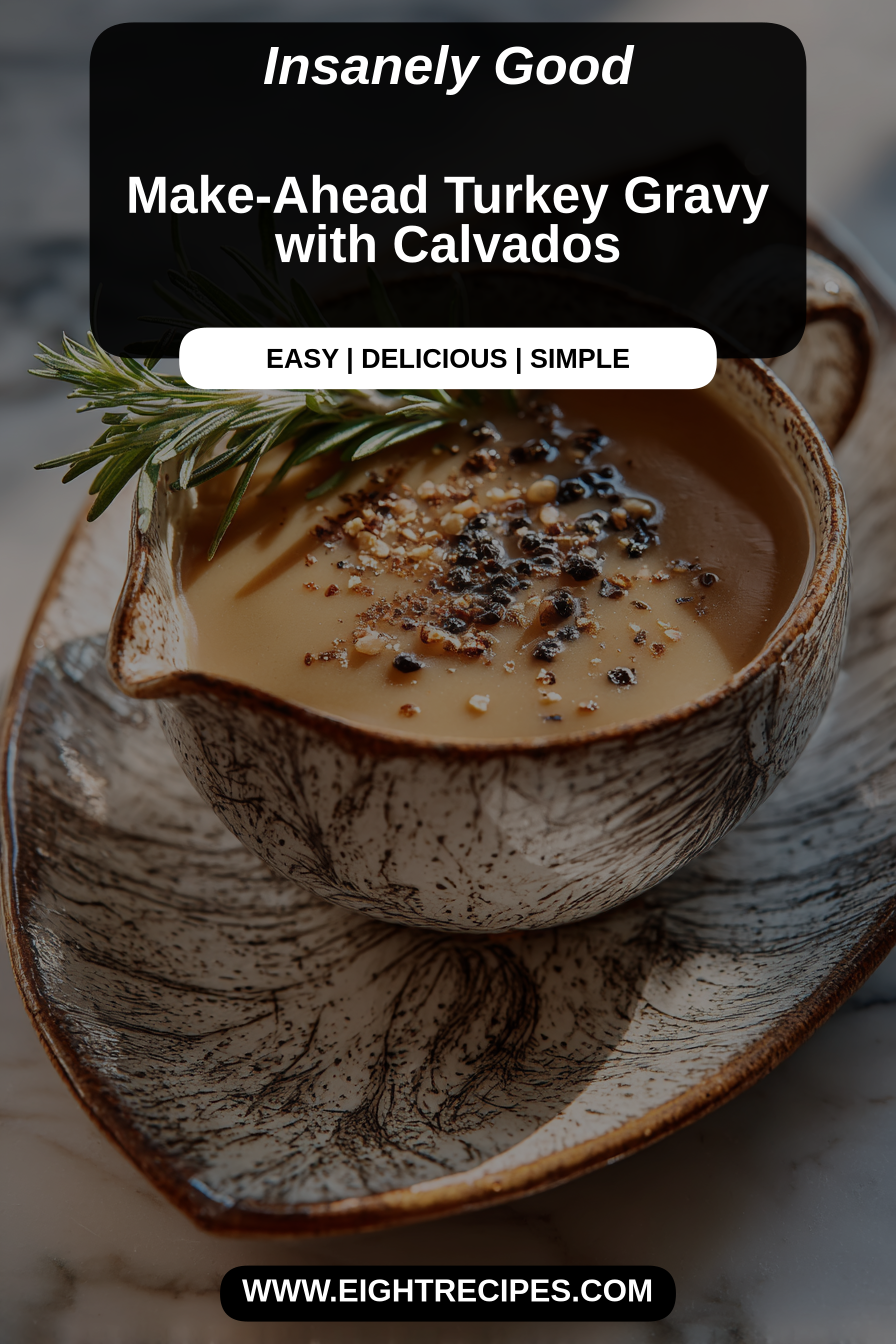
Make-Ahead Turkey Gravy with Calvados
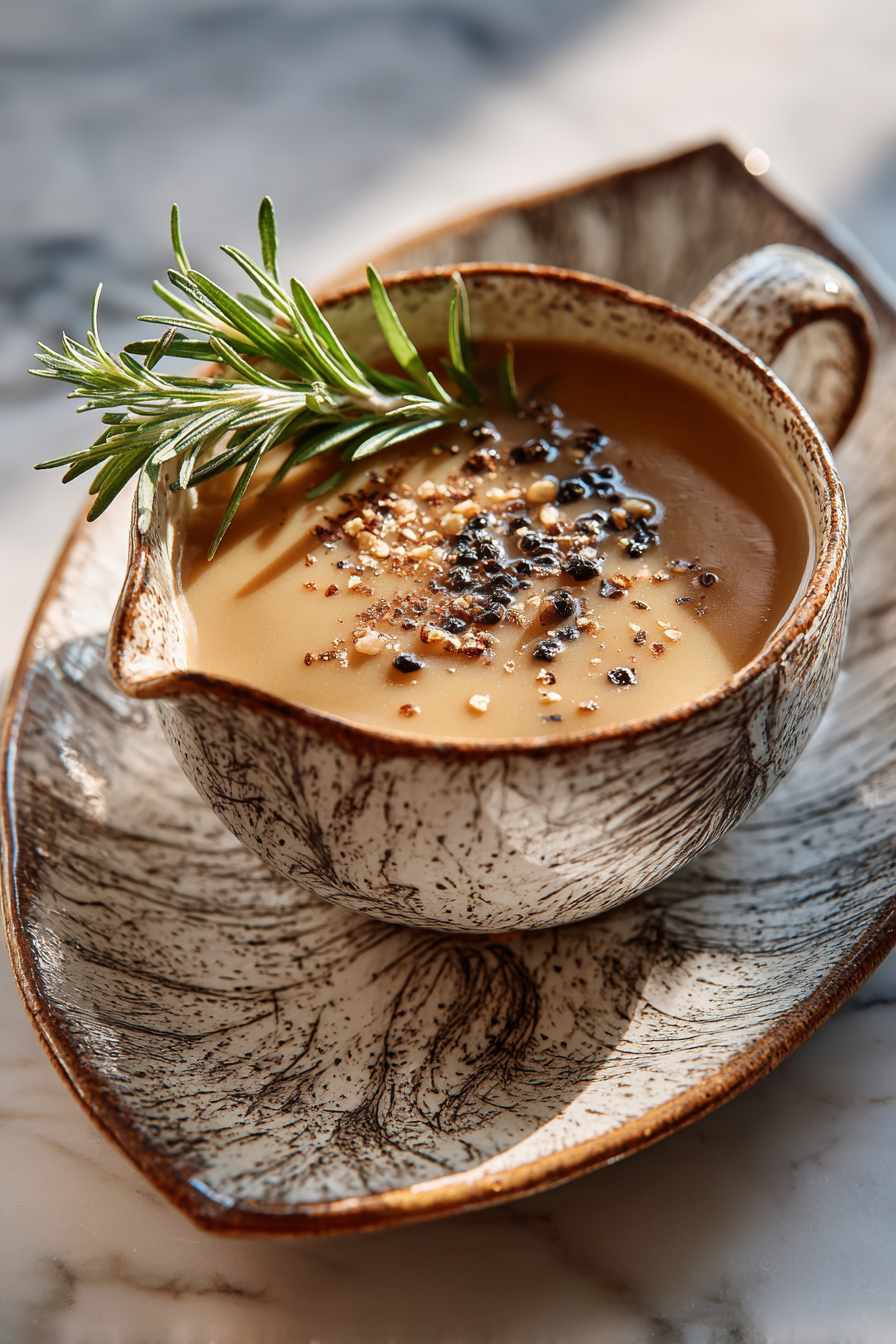
Thanksgiving, Christmas, or even just a Sunday roast—what’s a truly memorable meal without a glorious, rich gravy? This Make-Ahead Turkey Gravy with Calvados isn’t just any gravy; it’s a symphony of savory notes, deepened by a generous splash of apple brandy, and designed to free up your precious stovetop space when it matters most. It’s the kind of comforting, velvety sauce that makes every bite feel special, tying together all the elements of your holiday feast with an unparalleled warmth and sophistication.
My husband, Mark, jokes that before I perfected this gravy, our Thanksgiving mornings were a bit like a competitive sport. We’d be jostling for burner space, carving the turkey with one eye on a bubbling pot of last-minute gravy, inevitably leading to a few lumps or a less-than-perfect consistency. The year I first tried the make-ahead approach, adding a touch of Calvados on a whim, everything changed. I remember him taking his first bite, eyes widening, and simply saying, “Okay, this is it. This is the gravy.” It’s become a beloved tradition, now lovingly nicknamed “the peace-making gravy” because it brings such calm to our holiday preparations, allowing us to focus on family and enjoy the day without a flurry of last-minute kitchen chaos.
Why You’ll Love This Make-Ahead Turkey Gravy with Calvados
– The rich, nuanced flavor from the Calvados elevates this beyond a basic gravy, adding a subtle apple and oak complexity that truly sings with turkey.
– Making it ahead of time is a game-changer for holiday hosts, freeing up valuable stove space and your own mental bandwidth on the big day.
– It’s wonderfully consistent and smooth every time, avoiding the dreaded last-minute lumpy gravy panic.
– You’ll be able to savor the rich drippings from your turkey without the pressure of immediately transforming them, ensuring every drop of flavor is utilized effectively.
Behind the Recipe
Creating the perfect gravy has taught me a few things over the years. The biggest lesson? Don’t rush the roux. Giving the butter and flour enough time to cook out the raw flour taste, even letting it get a little toasty golden, is key to a deep, nutty flavor that forms the foundation of a truly exceptional gravy. Another insight is the power of reduction—don’t be afraid to let your stock simmer and concentrate. That’s where the magic happens, building layers of savory depth before any thickening agents even come into play. And the Calvados? It’s a wonderful secret weapon. I’ve found it’s best added to the pan while deglazing after roasting turkey bones, or directly to the simmering stock, allowing the alcohol to cook off and leave behind only its beautiful, fruity essence. The biggest trap I’ve fallen into is adding cold liquid to a hot roux too quickly, which is a surefire way to get lumps. A slow pour and continuous whisking are your best friends here.
Shopping Tips
– Canned Goods: Look for a high-quality, low-sodium chicken or turkey stock. If you’re not making your own, a good store-bought option is essential for a flavorful base.
– Fats & Oils: You’ll want unsalted butter for the roux, and keep an eye out for turkey fat or drippings if you’re roasting a bird. Rendered fat adds incredible richness.
– Baking Basics: All-purpose flour is standard for thickening, ensuring a smooth and reliable roux.
– Specialty Item: A good quality Calvados (apple brandy) is worth the splurge here. Its depth of flavor really shines through, but a good quality brandy or even dry sherry can work in a pinch.
– Fresh Herbs: A sprig or two of fresh thyme or sage added to the simmering stock or gravy can lend a beautiful aromatic complexity.
Prep Ahead Ideas
You can tackle a significant portion of this gravy a day or two before the main event. Start by making your turkey stock from roasted bones—it’s hands-down the best foundation. Once cooled, store the stock in airtight containers in the refrigerator. You can also make your roux (the cooked butter and flour paste) in advance and store it at room temperature, ready to be whisked into your simmering stock. Having these components prepped truly streamlines the final process, letting you focus on other dishes on the big day.
Time-Saving Tricks
While this gravy is designed to be made ahead, there are still ways to be efficient. Using a quality store-bought turkey or chicken stock can cut down on hours of simmering time without sacrificing too much flavor. If you’re making your own stock, roasting the bones until deeply golden before simmering them helps extract maximum flavor more quickly. For the gravy itself, have all your ingredients measured out and ready (mise en place) before you start. This ensures a smooth, uninterrupted process, especially when you’re whisking in the liquid. Sometimes, slowing down, like allowing the stock to reduce properly, actually saves you time in the long run by building profound flavor early on, so you don’t have to try to “fix” a bland gravy later.
Common Mistakes
One common pitfall is adding all the liquid at once to your roux, which can lead to frustrating lumps. Instead, whisk in a small amount of warm stock gradually, creating a smooth paste, then slowly incorporate the rest. Another mistake is not letting the gravy simmer long enough after thickening; a good 10-15 minutes allows the flavors to meld and the raw flour taste to disappear. If your gravy turns out too thin, a quick fix is to make a slurry of cornstarch and a little cold water, then whisk it into the simmering gravy until it thickens. If it’s too thick, simply whisk in a bit more warm stock or water until it reaches your desired consistency. And if it tastes bland, don’t be shy with a pinch more salt, a grind of black pepper, or a tiny splash of lemon juice to brighten everything up.
What to Serve It With
This Make-Ahead Turkey Gravy with Calvados is, of course, absolutely indispensable with a perfectly roasted turkey and a mountain of creamy mashed potatoes. It’s also divine drizzled over savory stuffing, roasted vegetables, or even a simple piece of roasted chicken or pork loin. Don’t forget biscuits, perfect for soaking up every last drop!
Tips & Mistakes
Storage Tips
Store in airtight containers in the fridge. It reheats beautifully, but if you sneak a bite cold straight from the container, it still works.
Variations and Substitutions
While the Calvados adds a unique complexity, you can certainly use brandy, dry sherry, or even a dry white wine for a different but equally delicious flavor profile. For a non-alcoholic version, simply omit the alcohol and use extra stock, perhaps adding a tablespoon of apple cider vinegar for a bright note. If you need a gluten-free option, swap the all-purpose flour for a gluten-free all-purpose flour blend or use a cornstarch or arrowroot slurry for thickening. Remember that cornstarch provides a glossier finish than flour, so adjust expectations. While these swaps work, I find the classic flour-based roux gives the most authentic, rich mouthfeel, and the Calvados truly elevates the holiday experience.