
Orzo with Asparagus and Feta
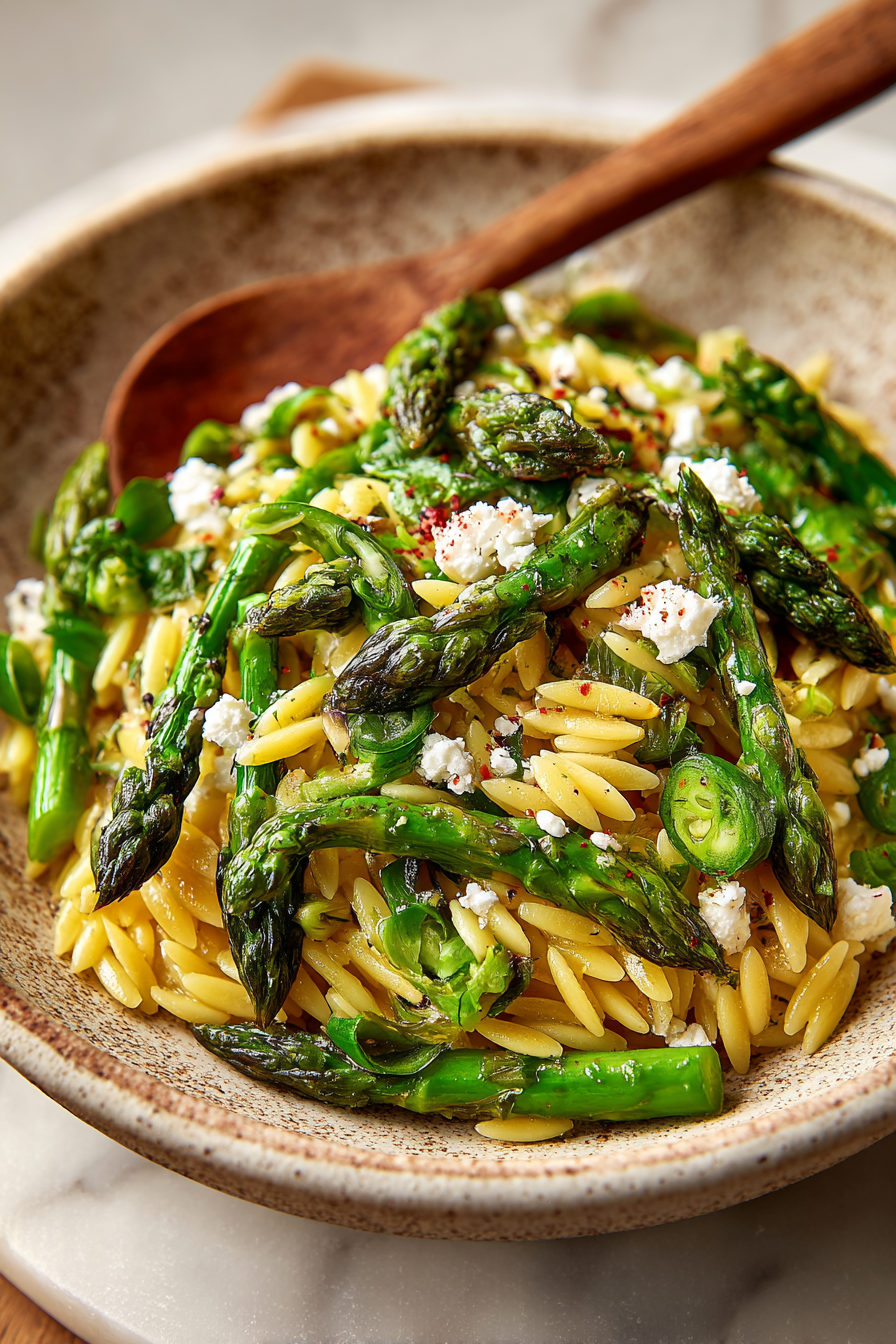
This Orzo with Asparagus and Feta is the sort of weeknight dinner that feels like a little celebration — bright, herb-scented, and comforting all at once. Tiny rice-shaped pasta cooks up quickly and soaks up a lemony, garlicky dressing, while just-tender asparagus keeps a pleasant snap; creamy feta brings a salty, tangy finish that ties everything together. It’s light enough for spring or summer, but sturdy enough to feel like a satisfying meal on cooler nights.
My husband has a real soft spot for anything with feta, so this one has earned a permanent place in our rotation. I remember the first time I made it, he declared it “restaurant-quality” between bites and asked for it again two nights later — which is saying a lot when dinner is usually judged against pizza. Our kiddo likes to steal a few asparagus tips before they ever make it to the plate, and now it’s one of those meals that sparks genuine excitement at our table: quick, bright, and always a little bit fancy-feeling without the fuss.
Why You’ll Love This Orzo with Asparagus and Feta
– Fast-cooking orzo gives you the comfort of a risotto-like dish without the stirring — perfect for busy weeknights.
– Asparagus brings a fresh, slightly grassy crunch that plays beautifully with creamy, salty feta.
– The lemon-garlic dressing brightens the whole bowl and keeps the flavors lively instead of heavy.
– Flexible: add protein, swap the cheese, or toss in roasted tomatoes and it still shines.
Behind the Recipe
This recipe began as a way to use up a lonely bunch of asparagus and a half-block of feta in my fridge. Over time I learned that timing is everything: cook the orzo until just tender and finish it off in the pan with the dressing so the pasta absorbs the flavors. Blanching or quickly sautéing the asparagus keeps it from going limp, and crumbling the feta right before serving preserves its creamy texture. Don’t be tempted to add too much liquid at the end — the goal is glossy, flavored orzo, not a soupy grain salad.
Shopping Tips
– Vegetables: Choose firm, straight asparagus stalks with tightly closed tips; avoid limp, wilted spears. Thin to medium stalks cook more evenly than very thick ones.
– Grains/Pasta: Look for good-quality orzo (sometimes labeled risoni) — bronze-cut pasta will hold sauce better but any brand works for weeknight meals.
– Cheese: Buy a block of feta and crumble it yourself for the best texture; avoid overly dry, pre-crumbled feta when possible.
– Fresh Herbs: Pick fresh parsley and/or dill with bright green leaves and no yellowing; they add a clean finish that dried herbs can’t fully replicate.
– Fats & Oils: Use extra-virgin olive oil for the dressing — it contributes fruitiness and mouthfeel, so splurge a little if your budget allows.
Prep Ahead Ideas
– Trim asparagus and snap off woody ends a day ahead; store in a container with a damp paper towel so they stay crisp.
– Zest the lemon and mix the dressing (oil, lemon juice, garlic, salt) up to 24 hours in advance; bring to room temperature before tossing with warm orzo.
– Measure orzo into a resealable bag and set out the feta to come to room temperature; these small steps cut active cook time significantly.
Time-Saving Tricks
– Use one large skillet for finishing the cooked orzo and asparagus so you avoid extra pans and can combine flavors quickly.
– Keep frozen peas on hand to stir in at the end if you want more veg without extra chopping.
– Prep a simple vinaigrette ahead and toss with hot orzo to let it absorb flavor while you plate other elements; a short rest elevates the dish.
Common Mistakes
– Overcooking asparagus until it’s mushy — I did this once and the dish lost its brightness; aim for tender-crisp and shock in cold water if needed.
– Adding feta too early so it melts into a chalky layer — crumble it on top just before serving for contrast.
– Under-salting the pasta water or the finished dish — orzo needs seasoning during cooking and again at the end; taste as you go.
– Rescue: if the bowl seems dry, stir in a splash of reserved pasta cooking water or a little more olive oil; if too salty, add a squeeze of lemon and a handful of blanched peas or extra orzo.
What to Serve It With
Tips & Mistakes
Pair with a simple green salad dressed with a lemon vinaigrette or roasted cherry tomatoes to echo the bright flavors. For protein, grilled shrimp, seared chicken breast, or a handful of toasted pine nuts work beautifully. If you plan to make this a main, add bulk with chickpeas or white beans; for a lighter side, serve a smaller portion alongside grilled fish.
Storage Tips
Store in airtight containers in the fridge. It reheats beautifully, but if you sneak a bite cold straight from the container, it still works.
Variations and Substitutions
– Swap asparagus for green beans, broccolini, or roasted zucchini if asparagus isn’t in season.
– Use goat cheese or ricotta salata instead of feta for a milder, creamier finish.
– Stir in lemon zest and extra herbs for a punchier, more aromatic version; for a smoky twist, add charred red peppers or a touch of smoked paprika.
– If you need gluten-free, substitute rice-shaped gluten-free pasta orzo if available; note that texture will differ slightly.

Write me the frequently asked questions and answers Orzo with Asparagus and Feta in the same way as the example below.