
Thai Basil Chicken Stir Fry
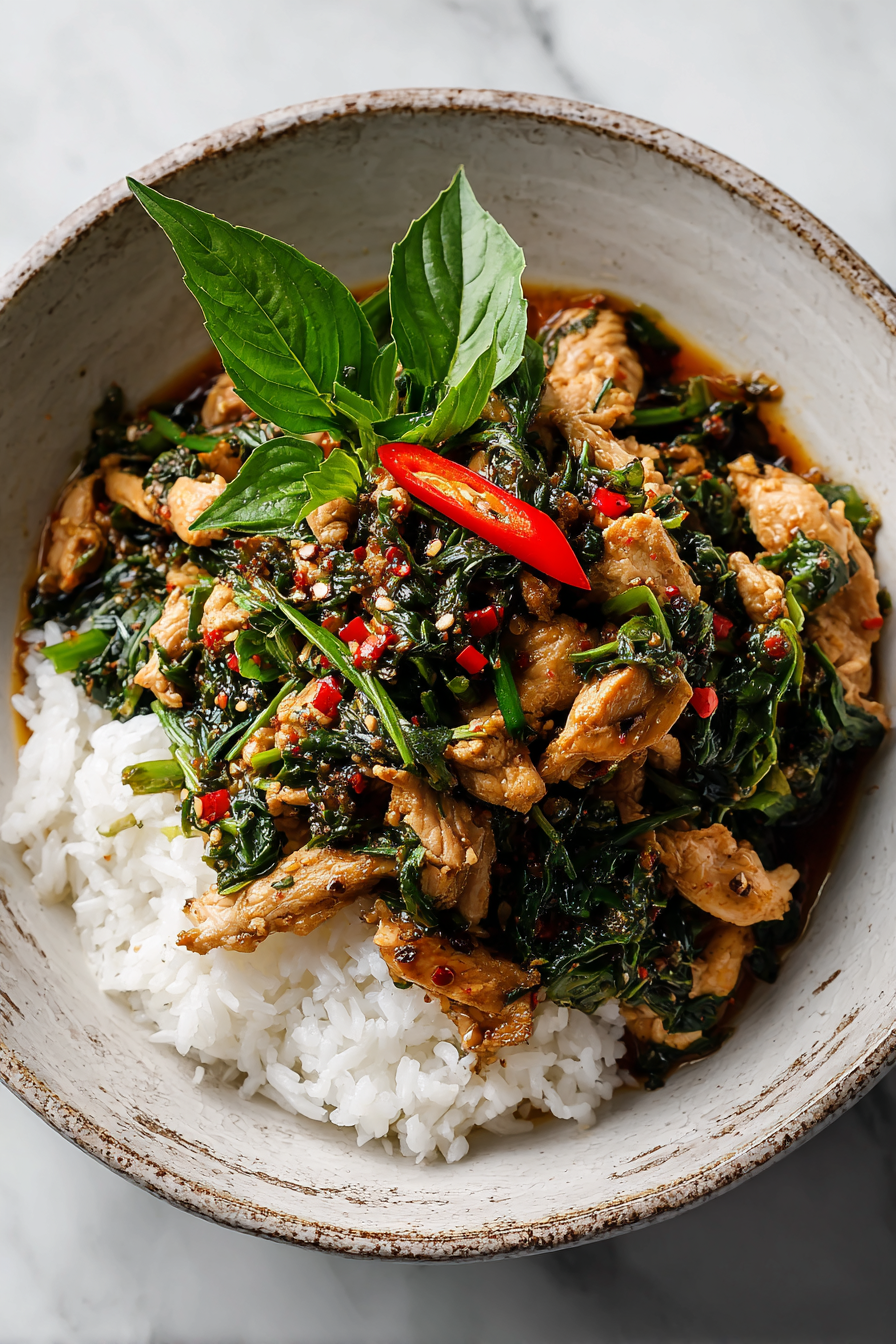
This Thai Basil Chicken Stir Fry is the kind of weeknight dinner that tastes far more special than the time it takes to make. Bright, savory, and laced with the peppery lift of fresh Thai basil, it’s a one-skillet dinner that balances sweet, salty, spicy, and herbal notes in a way that somehow feels both comfortingly familiar and a little adventurous.
My husband insists this is the meal that convinced him I could actually cook “restaurant food” at home. We eat it at least once every other week: I crank the heat, he chops the scallions like a sous-chef, and our kiddo beats us both to the serving bowl every time. It became our little ritual when schedules got busy—quick, satisfying, and reliably comforting on nights when we needed something lively on the table without fuss.
Why You’ll Love This Thai Basil Chicken Stir Fry
– Fast, weeknight-friendly: cooks in one hot skillet in under 20 minutes once your mise en place is ready.
– Big, layered flavor: fish sauce, a touch of sweetness, fresh chilies, and a hit of lime create a complex sauce that feels upscale but is easy to assemble.
– Flexible protein: works with ground chicken, thin-sliced breast or thigh, or even tofu for a vegetarian swap.
– Bright herbal finish: Thai basil added at the end keeps the dish fragrant and vibrant—no heavy, cloying sauces here.
Behind the Recipe
This dish thrives on very high heat and quick cooking. Over the years I learned that crowding the pan is the single biggest sin—when the chicken steams instead of sears you lose the caramelized bits that make the sauce sing. I also learned to add the basil at the very last moment; wilting it too soon turns that bright, peppery note into something flat. Little touches that lift it: a splash of lime to brighten, a pinch of sugar (or palm sugar) to balance fish sauce, and making sure the garlic and chilies get just a little color before everything else joins the party. If you want real wok char, heat the pan until it’s smoking before you add oil, and keep everything moving.
Shopping Tips
– Protein: Choose boneless, skinless chicken thighs for juiciness; breasts work if sliced thin against the grain, and ground chicken is a great shortcut.
– Fresh Herbs: Seek out Thai basil specifically—its clove-like, peppery aroma is different from sweet basil and worth tracking down at Asian markets.
– Vegetables: Use fresh scallions, bell pepper, or Thai chilies; avoid limp or spotted produce for the best texture and flavor.
– Spices: Get good quality fish sauce and a low-sodium soy sauce or tamari if you’re watching salt—these are the backbone of the sauce.
– Specialty Item: Palm sugar (or light brown sugar) and fresh lime are small splurges that truly round out the flavor; have them on hand for authenticity.
Prep Ahead Ideas
– Slice the chicken, mince garlic, and chop chilies and scallions the day before; store in airtight containers or zip-top bags in the fridge.
– Mix the sauce (fish sauce, soy, sugar, a splash of water) in a jar so it’s ready to pour—keeps flavor consistent and speeds cooking.
– Cook rice ahead and refrigerate; rewarm in a little water or steam to revive it for service.
– Prepped ingredients will keep 24–48 hours; keep aromatics separate from cut proteins to preserve texture.
Time-Saving Tricks
– Use ground chicken or pre-sliced chicken from the butcher for the fastest prep.
– Keep a jar of pre-mixed sauce in the fridge for busy nights—just shake and add.
– Use a heavy skillet or wok and preheat it thoroughly so you get a quick sear and don’t overcook the meat.
– Buy pre-minced garlic or a jar of chili-garlic paste in a pinch, but add fresh basil at the end for freshness you can’t shortcut.
Common Mistakes
– Overcrowding the pan: I did this once and the chicken steamed; the fix is to cook in batches so each piece gets a proper sear.
– Adding basil too early: it turns limp and loses its aroma—add it at the end off the heat for best results.
– Too much liquid: if the sauce is watery, reduce it over high heat or stir in a slurry of cornstarch and water to thicken quickly.
– Over-salting: fish sauce is potent—start with less and adjust after the sauce reduces.
What to Serve It With
Serve over steamed jasmine rice or with sticky rice for a heartier feel. A fried egg on top is our family’s indulgent favorite—the yolk adds richness that plays beautifully with the basil and chilies. Fresh cucumber salad or quick pickled carrots and daikon cut through the richness and add crunch.
Tips & Mistakes
If you’re craving more heat, add sliced Thai chilies or a spoonful of bird’s eye chile paste while cooking; if you prefer milder flavors, remove the seeds or use a milder pepper. Don’t skip the lime at the end—its acidity lifts the whole dish and balances salt and sugar.
Storage Tips
Store in airtight containers in the fridge. It reheats beautifully, but if you sneak a bite cold straight from the container, it still works.
Variations and Substitutions
Use ground turkey or thinly sliced pork in place of chicken, or firm tofu for a vegetarian version (press it well and pan-fry until golden). Swap soy sauce for tamari to make it gluten-free, and palm sugar for brown sugar if needed. I’d skip basil substitutes if you can—Thai basil’s unique aroma is part of what makes the dish sing; if you must, fresh holy basil if available is close, and basil with a handful of fresh cilantro is a decent fallback.
Write me the frequently asked questions and answers Thai Basil Chicken Stir Fry in the same way as the example below.